Cat breed
Savannah
Mèo Savannah

The Savannah is a hybrid of the domestic cat and the African serval [1]. It's tall and lean, with a long neck and legs, tall ears set on top of the head and bold spots [1]. Savannahs are very energetic, bore easily and need daily interaction [1]. Of the four major registries, only TICA (The International Cat Association): An international cat registry based in the US and one of the largest. It often recognizes newer breeds before CFA does. All terms recognises the breed [1]; FIFe (Fédération Internationale Féline): The International Feline Federation, an umbrella body of cat clubs, mostly in Europe. All terms does not list it [2]. Breeding wild-cat hybrids is a live animal-welfare debate [3].
Contents (10 sections)
Quick facts
- Origin
- United States (1986), from a domestic cat crossed with an African serval
- Weight
- ~3.5–9 kg
- Lifespan
- ~12–15+ years
- Coat
- short, spotted
- Energy
- high
Details & sources
- Size
- Medium to large; most are only the size of a large domestic cat but look heavier than they are [1]
- Weight
- Purina UK gives about 3.5–9 kg [6]
- Lifespan
- TICA (The International Cat Association): An international cat registry based in the US and one of the largest. It often recognizes newer breeds before CFA does. All terms estimates 12–15+ years [1]; no breed-specific longevity study found
- Coat
- Short, without a heavy undercoat, spotted [1]
Traits (scale 1–5)
- Energy
- 5/5
- Shedding
- 2/5
- Grooming needs
- 1/5
- Good with kids
- 3/5
- Vocal
- 3/5
- Independence
- 3/5
Basis: Editorial estimate based on TICA's description, not a measurement. Behaviour may differ between hybrid generations
Recognized by major cat registries
Cat registries keep pedigree records and set the standard for each breed. Tap an abbreviation to see what it means.
| CFA (Cat Fanciers' Association): The world's largest registry of pedigree cats, based in the US. It keeps pedigree records, writes breed standards and runs cat shows. All terms US | No |
|---|---|
| TICA (The International Cat Association): An international cat registry based in the US and one of the largest. It often recognizes newer breeds before CFA does. All terms international, US-based | Yes |
| FIFe (Fédération Internationale Féline): The International Feline Federation, an umbrella body of cat clubs, mostly in Europe. All terms Europe | No |
| GCCF (Governing Council of the Cat Fancy): The UK's oldest pedigree cat registry (since 1910). All terms UK | No |
History
The first known Savannah was born on 7 April 1986, from a domestic female and an African serval sire. The F1, F2…: Generations from the wild ancestor: an F1 has a wild parent (such as a serval), an F2 a wild grandparent. All terms female kitten was named Savannah [1]. Patrick Kelly and Joyce Sroufe wrote the original TICA breed standard [1]. TICA accepted the breed for registration in 2001 and for championship in 2012 [1].
Appearance
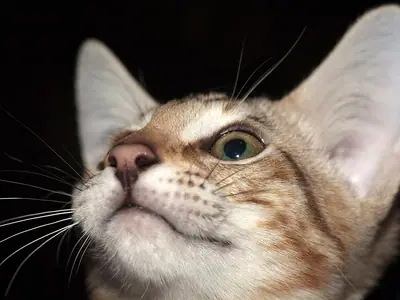
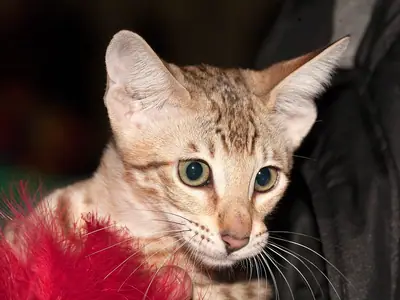
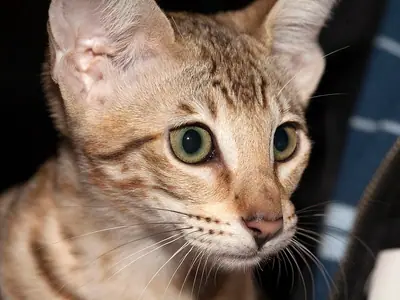
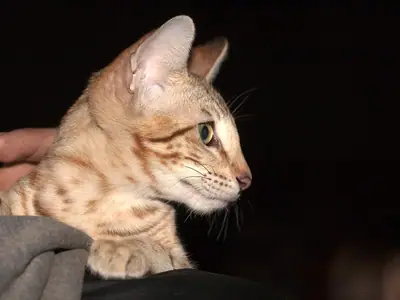
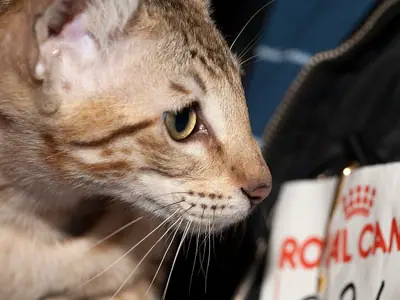
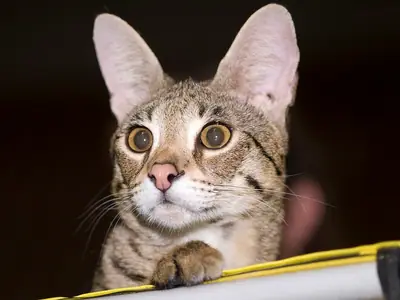
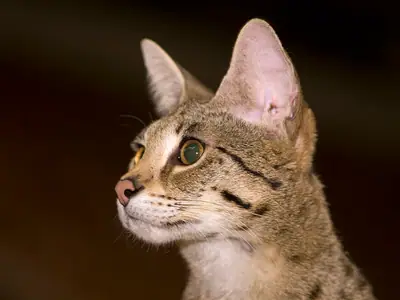
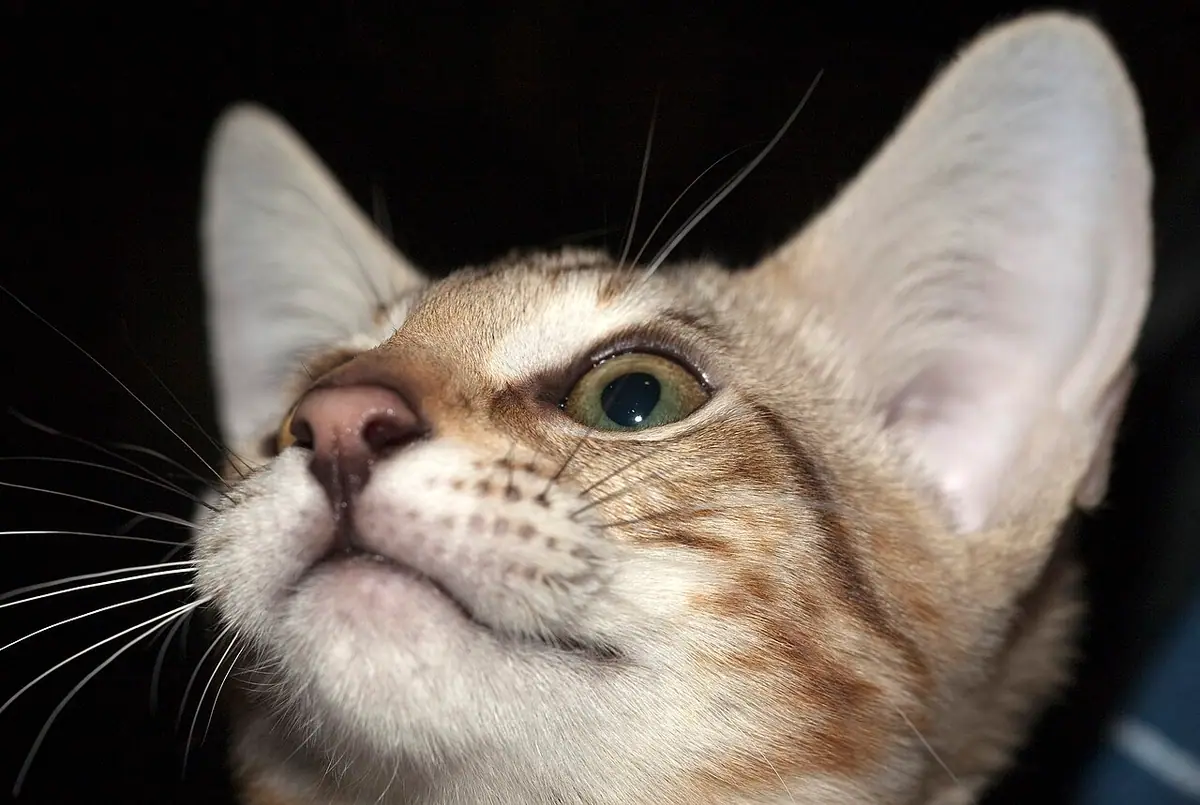
- Build: tall and lean, with a long neck and long legs; looks heavier than it is [1].
- Head: tall ears set on top of the head; hooded eyes, flat on top [1].
- Coat: short, without a heavy undercoat [1].
- TICA standard colours: brown (black) spotted tabby, silver spotted tabby, black and black smoke [1].
- Size: most are only the size of a large domestic cat [1].
Photo gallery
7 photos · tap to enlarge- (enlarge, photo 1/7)
- (enlarge, photo 2/7)
- (enlarge, photo 3/7)
- (enlarge, photo 4/7)
- (enlarge, photo 5/7)
- (enlarge, photo 6/7)
- (enlarge, photo 7/7)
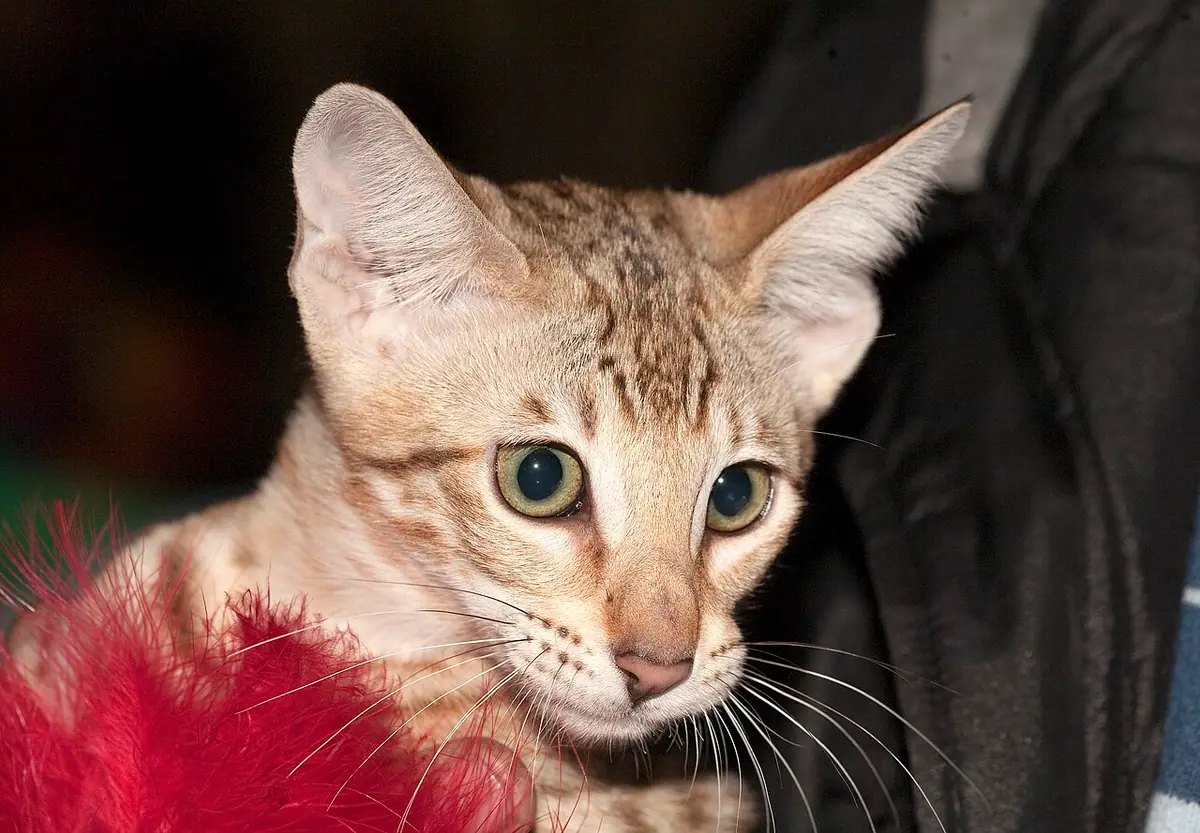
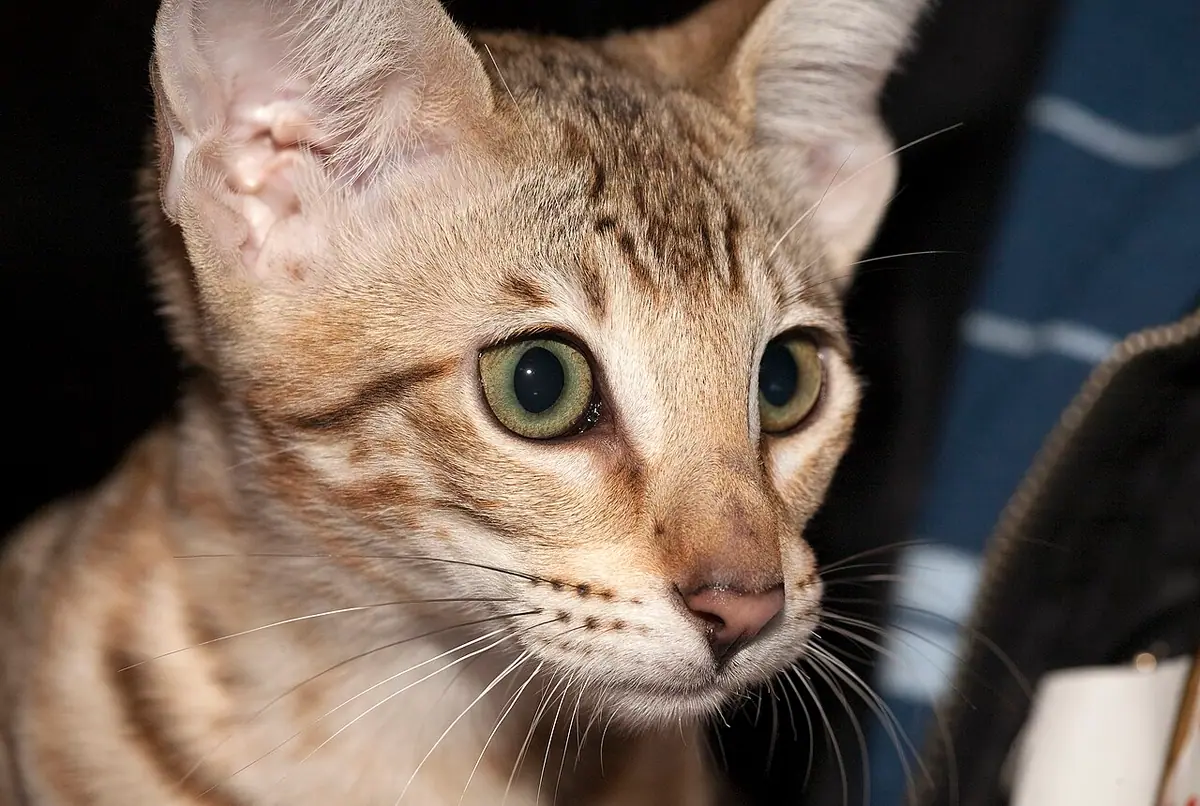
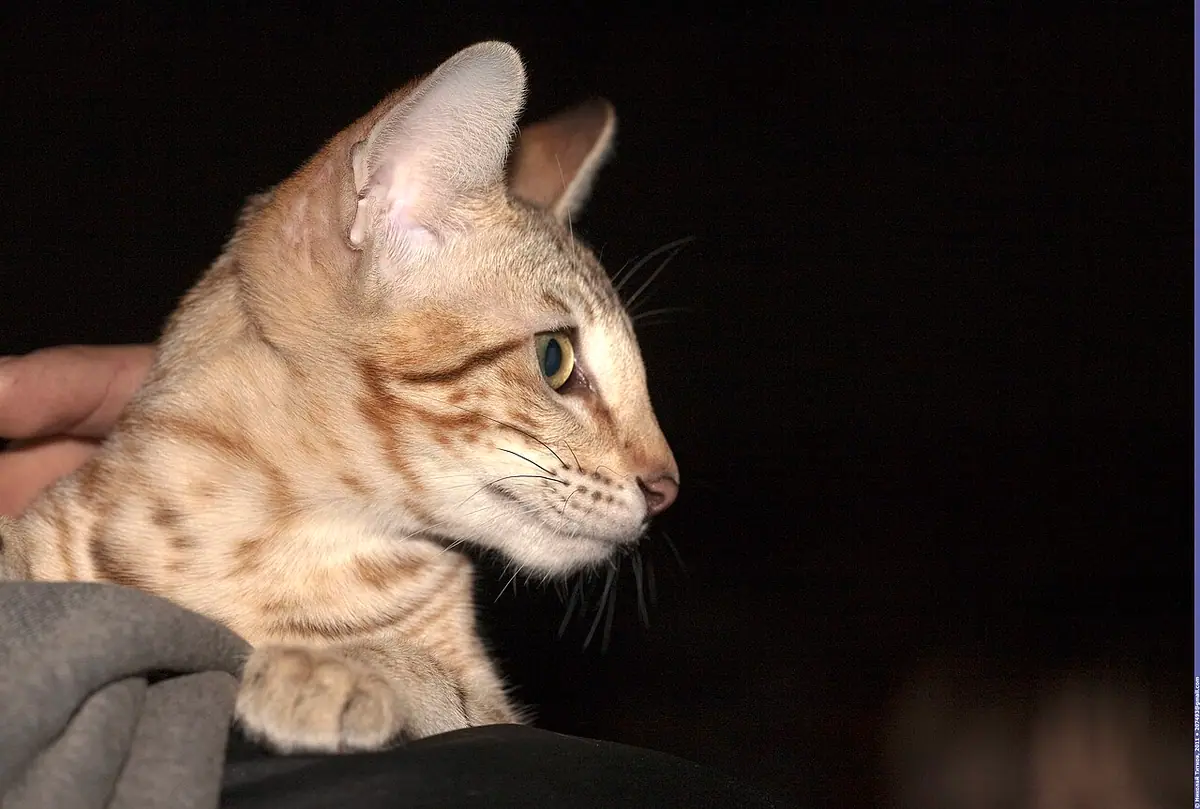
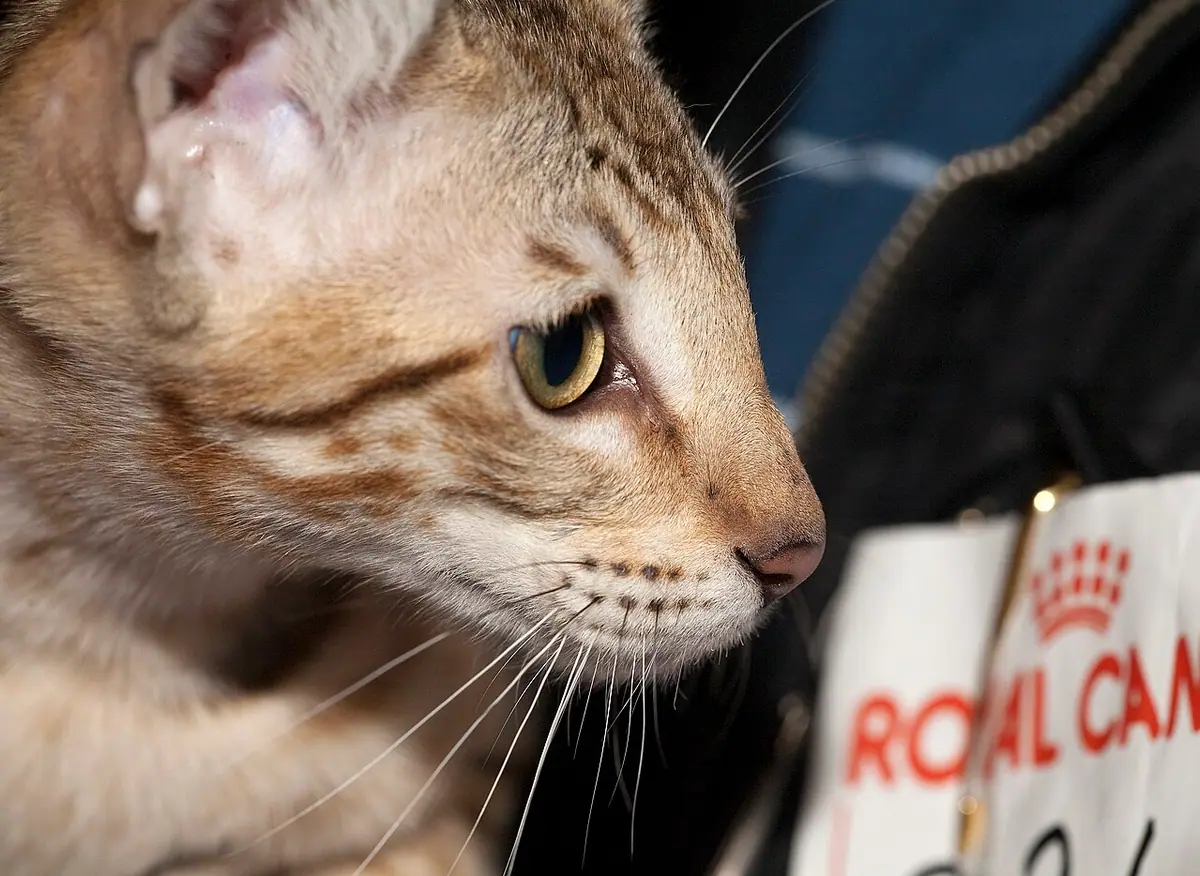
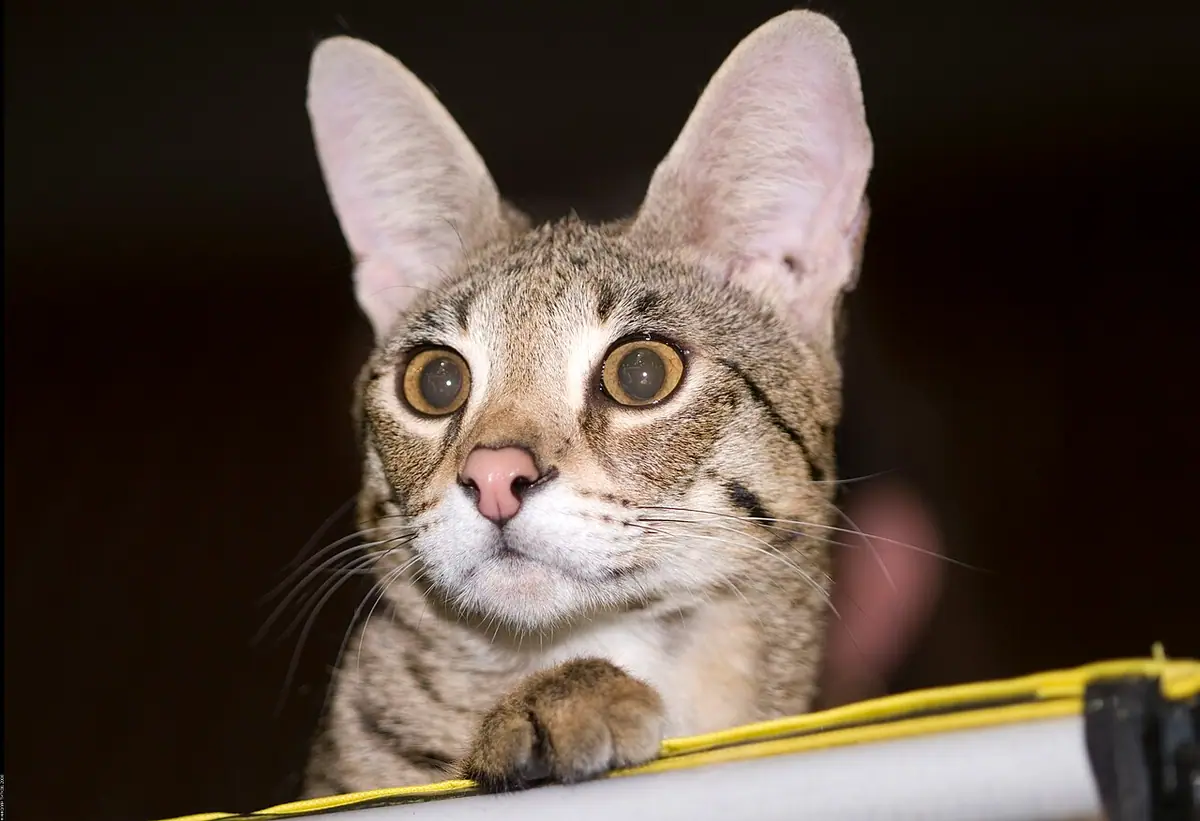
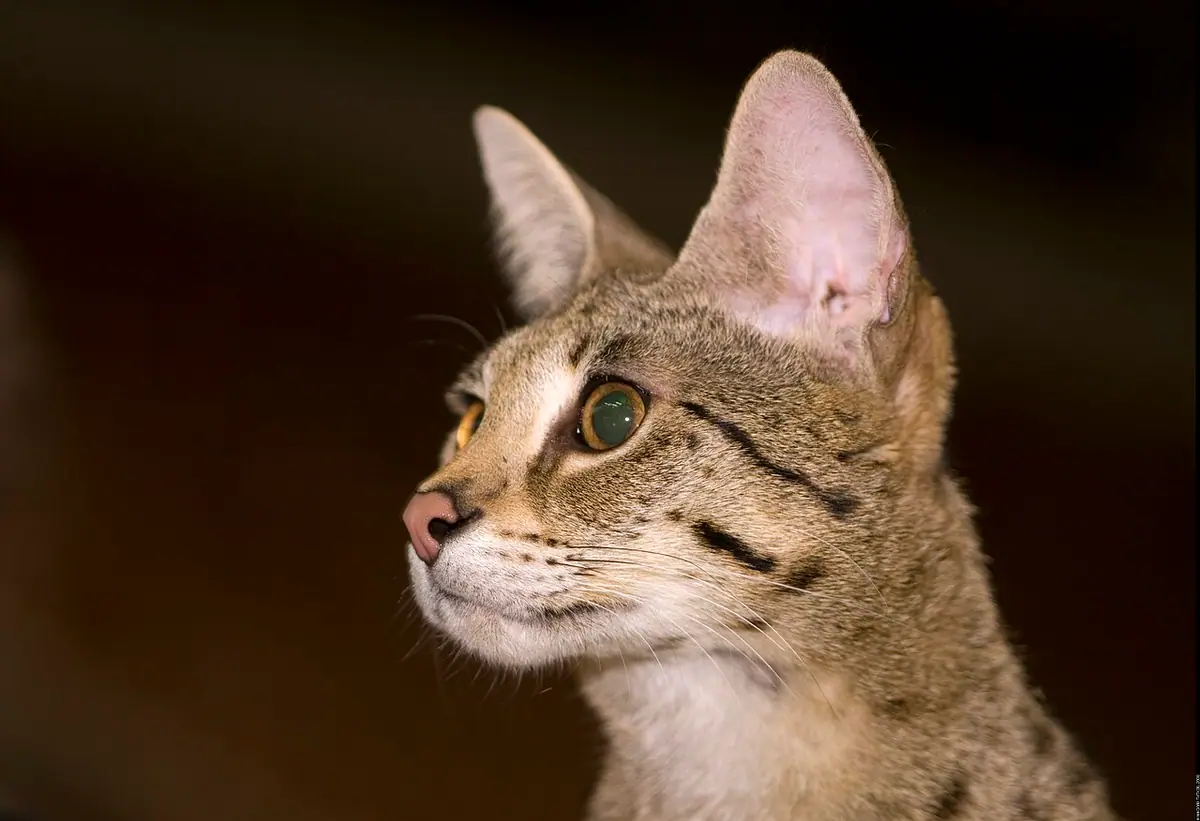
.jpg)
Photos: Wikimedia Commons - author & licence shown when enlarged and on the Photo credits page.
Temperament
Savannahs are high-energy, get bored easily and need daily interaction [1]. They're great jumpers and like perching on doors and fridges [1]. They aren't lap cats, but they're loyal and greet people with headbutts [1]. Many like water and can learn to walk on a leash and play fetch [1]. TICA says they suit families with older children [1]. The Cat Group notes that hybrids keep many wild-type behaviours, and owners may struggle with some of them [3].
Care
Health
- Screening: TICA recommends screening for Pyruvate kinase deficiency: An inherited condition that makes red blood cells break down, causing bouts of anaemia; a gene test exists. All terms (PK) deficiency and progressive retinal atrophy (PRA (Progressive retinal atrophy): An inherited eye disease that slowly worsens sight and can lead to blindness. All terms ) [1].
- HCM (Hypertrophic cardiomyopathy): A heart disease where the heart wall thickens; the most common heart disease in cats. All terms : TICA notes some history of hypertrophic cardiomyopathy, with no specific genetic test [1].
- Lifespan: TICA estimates 12–15+ years [1]. We found no breed-specific longevity study.
Ask the breeder about the parents' screening results, and talk to your vet about any specific concern.
A note on welfare
The Cat Group, a coalition of cat welfare organisations, does not support breeding wild-cat hybrids or keeping them as pets, on welfare grounds [3]. It considers hybrids fewer than five generations from the wild cat most at risk. Servals can weigh up to about 15 kg against 4–5 kg for a domestic cat, so mating risks injury to the domestic parent; many hybrid pregnancies don't reach full term; and no commercial test can confirm a cat's generation [3]. TICA notes the breed is still illegal in some states and countries [1].
Don't confuse with…
Ask your vet. This information is for reference only and does not replace a veterinary diagnosis.
Cat facts
Frequently asked questions
Is it legal to own a Savannah cat?
It depends where you live. TICA (The International Cat Association): An international cat registry based in the US and one of the largest. It often recognizes newer breeds before CFA does. All terms notes the breed is still illegal in some states and countries because of its serval ancestry [1]. In the UK, early-generation crosses need a licence under dangerous wild animals law [3]. Check with your local authorities.
What do F1 and F2 mean for Savannahs?
They count generations from the serval ancestor: an F1, F2…: Generations from the wild ancestor: an F1 has a wild parent (such as a serval), an F2 a wild grandparent. All terms has a serval parent, an F2 is the next generation. The Cat Group considers hybrids fewer than five generations from the wild cat most at risk, and backs a UK proposal to ban breeding from F1 and F2 cats [3].
Are Savannahs good with young children?
TICA says they suit families with older children. They're very energetic, bore easily and need daily interaction [1].
How big do Savannah cats get?
According to TICA, most are only the size of a large domestic cat, but long legs, a long neck and tall ears make them look bigger and heavier than they are [1].
Similar breeds


Breed photos: Wikimedia Commons (CC0 / CC BY / CC BY-SA) - authors & licences on the Photo credits page.
References
- TICA, Savannah (breed profile & standard)
- FIFe, Breeds (Savannah not listed)
- The Cat Group, Position statement on hybrid cats (via International Cat Care)
- CFA, Bengal (breed profile & standard)
- CFA, Ocicat (breed profile)
- Purina UK, Savannah cat breed information
Accessed: 2026-10-02
CFA, TICA, FIFe and GCCF are the major cat registries in the US, Europe and the UK. See the glossary
Written by Catopedia from the sources above. Photos credit their author and licence under each image and on the Photo credits & licences.