Cat breed · England
Oriental Shorthair
Mèo Phương Đông lông ngắn

The Oriental Shorthair is a study in elegance, with a wedge-shaped head, huge ears and a long, whippy tail that reveal its Siamese roots [1]. Unlike the Siamese, it comes in over 600 colour, pattern and coat-length combinations [1]. Orientals are extremely bright, people-centred and chatty [1]. The breed is recognised by CFA (Cat Fanciers' Association): The world's largest registry of pedigree cats, based in the US. It keeps pedigree records, writes breed standards and runs cat shows. All terms , FIFe (Fédération Internationale Féline): The International Feline Federation, an umbrella body of cat clubs, mostly in Europe. All terms [2] and GCCF (Governing Council of the Cat Fancy): The UK's oldest pedigree cat registry (since 1910). All terms [3].
Contents (10 sections)
Quick facts
- Origin
- Europe (1950s), from Siamese lines
- Weight
- ~3.2–5.4 kg
- Lifespan
- ~12–15 years
- Coat
- short, sleek
- Energy
- high
Details & sources
- Size
- Svelte and long, fine-boned but firmly muscular [1]
- Weight
- VCA gives about 3.2–5.4 kg (7–12 lb) [7]
- Lifespan
- GCCF (Governing Council of the Cat Fancy): The UK's oldest pedigree cat registry (since 1910). All terms estimates 12–15 years [3]; no breed-specific longevity study found
- Coat
- Short, sleek and "painted-on" (shorthair division) [1]
Traits (scale 1–5)
- Energy
- 4/5
- Shedding
- 1/5
- Grooming needs
- 1/5
- Good with kids
- 4/5
- Vocal
- 5/5
- Independence
- 1/5
Basis: Editorial estimate based on CFA (Cat Fanciers' Association): The world's largest registry of pedigree cats, based in the US. It keeps pedigree records, writes breed standards and runs cat shows. All terms 's description, not a measurement
Recognized by major cat registries
Cat registries keep pedigree records and set the standard for each breed. Tap an abbreviation to see what it means.
| CFA (Cat Fanciers' Association): The world's largest registry of pedigree cats, based in the US. It keeps pedigree records, writes breed standards and runs cat shows. All terms US | Yes |
|---|---|
| TICA (The International Cat Association): An international cat registry based in the US and one of the largest. It often recognizes newer breeds before CFA does. All terms international, US-based | - |
| FIFe (Fédération Internationale Féline): The International Feline Federation, an umbrella body of cat clubs, mostly in Europe. All terms Europe | Yes |
| GCCF (Governing Council of the Cat Fancy): The UK's oldest pedigree cat registry (since 1910). All terms UK | Yes |
History
Development began in Europe in the 1950s [1]. Britain's GCCF first recognised chestnut, lavender and white solids; other colours followed in the 1960s and 1970s as US breeders developed them [1]. CFA accepted Oriental Shorthairs for registration in 1974 and for championship in 1977 [1]. In 1988 CFA added Oriental Longhairs and renamed the breed simply "Oriental", with the two coat lengths shown in separate divisions [1].
Appearance
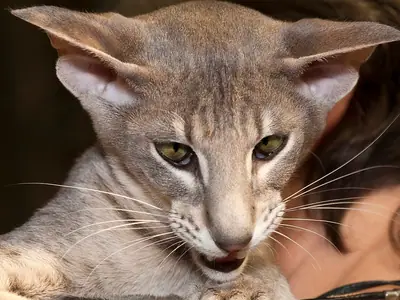
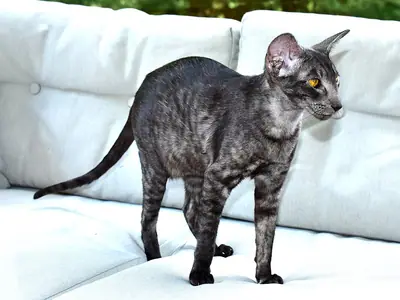
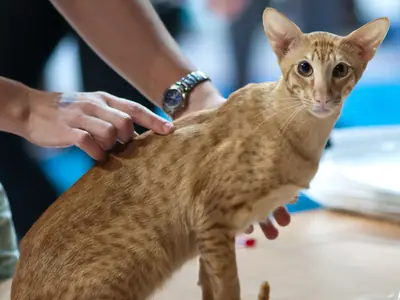
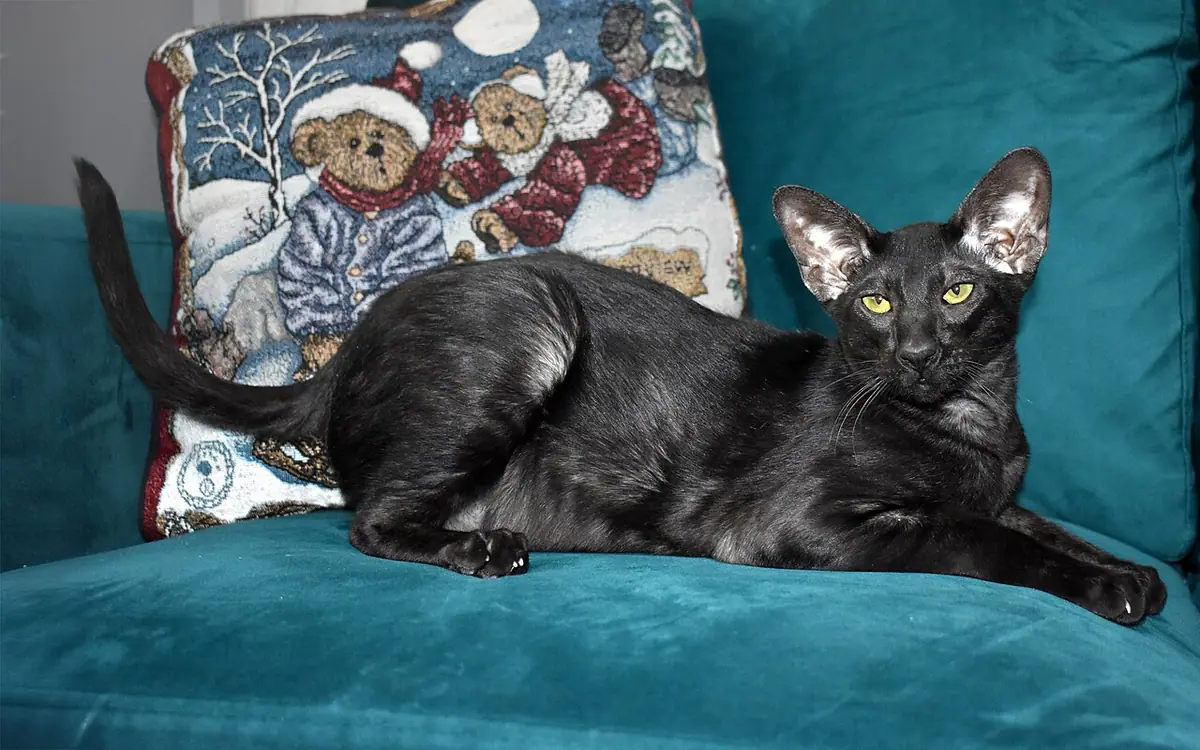
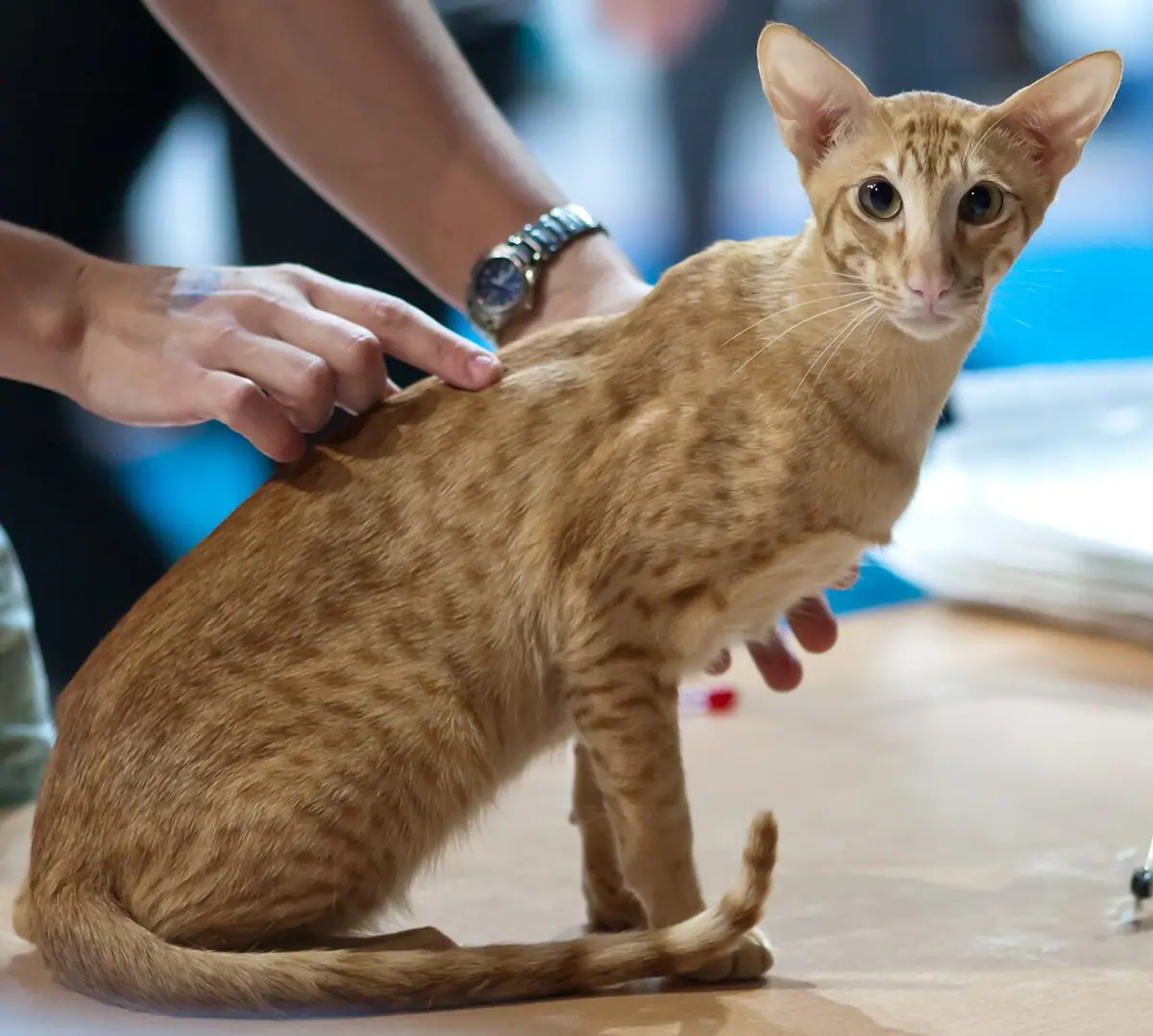
- Body: svelte like the Siamese, fine-boned and tubular, with surprisingly firm muscle [1].
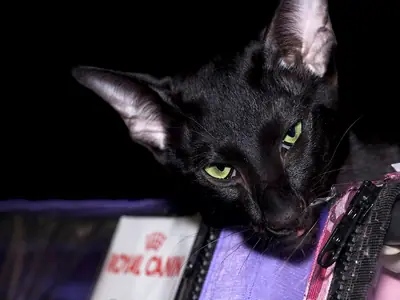
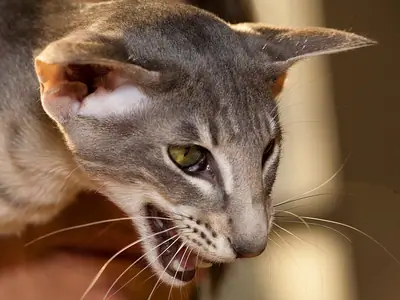
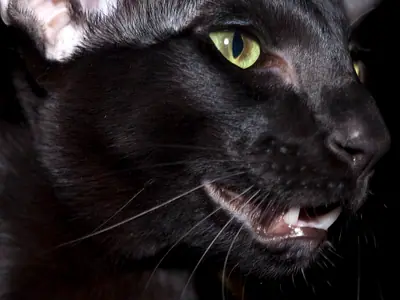
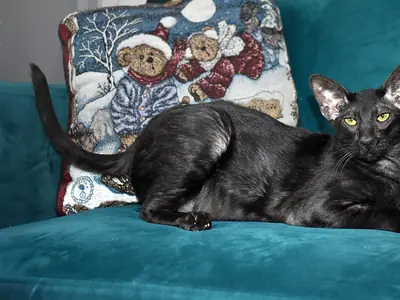
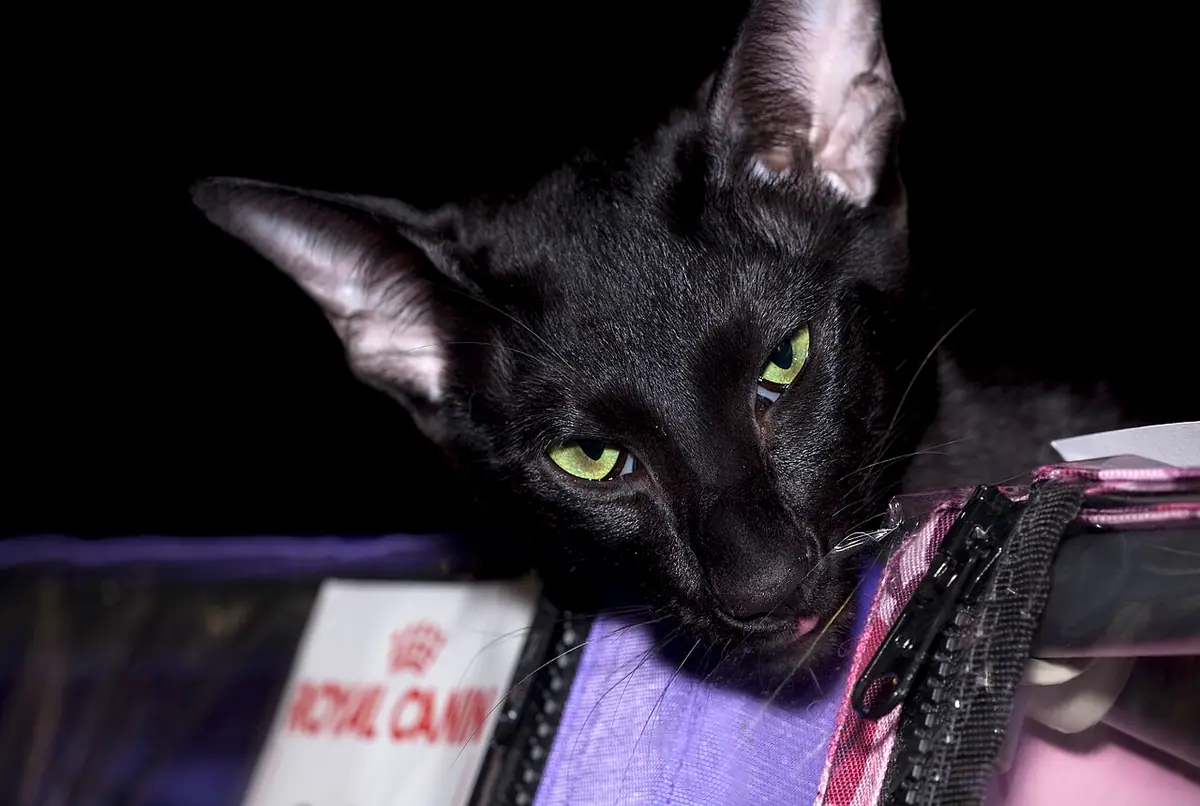
- Head: a long wedge with a straight profile and almond eyes; strikingly large, broad-based ears continue the wedge [1].
- Tail: long and whippy in the shorthair [1].
- Coat: short, sleek and "painted-on" [1].
- Colours: over 600 colour, pattern and coat-length combinations [1].
Photo gallery
7 photos · tap to enlarge- (enlarge, photo 1/7)
- (enlarge, photo 2/7)
- (enlarge, photo 3/7)
- (enlarge, photo 4/7)
- (enlarge, photo 5/7)
- (enlarge, photo 6/7)
- (enlarge, photo 7/7)
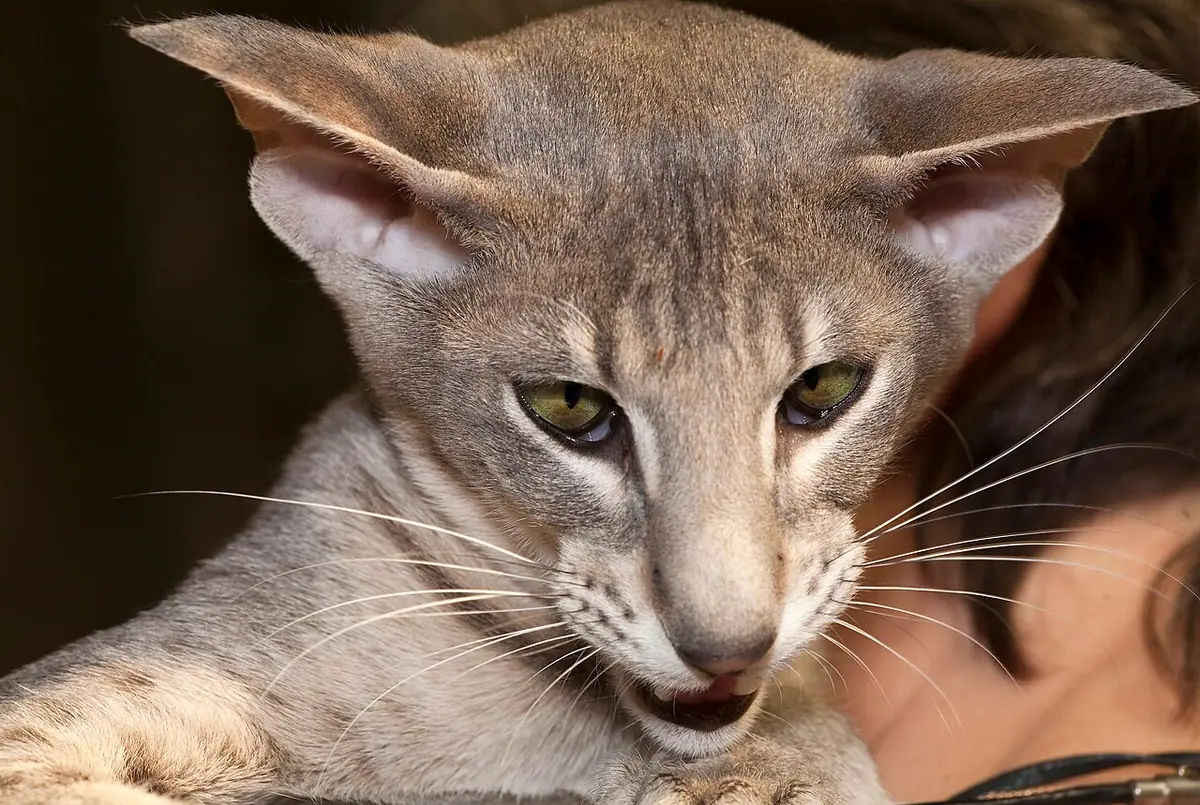
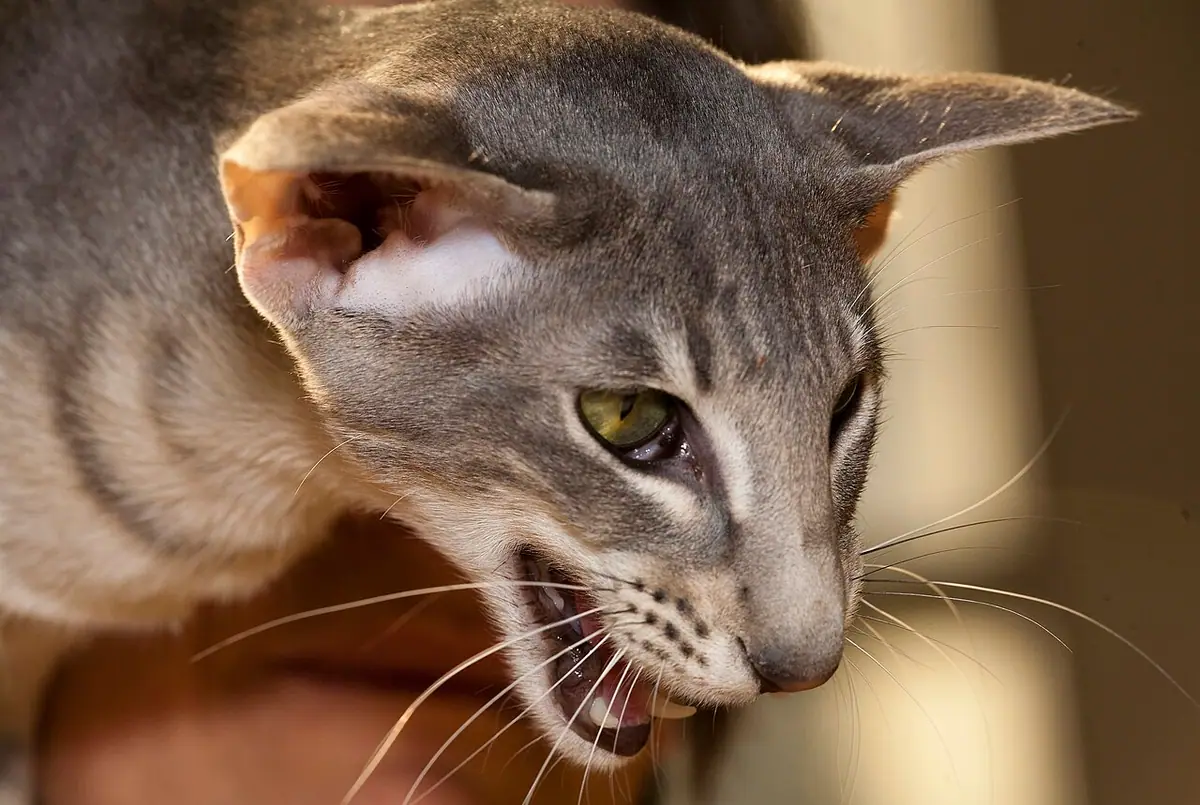
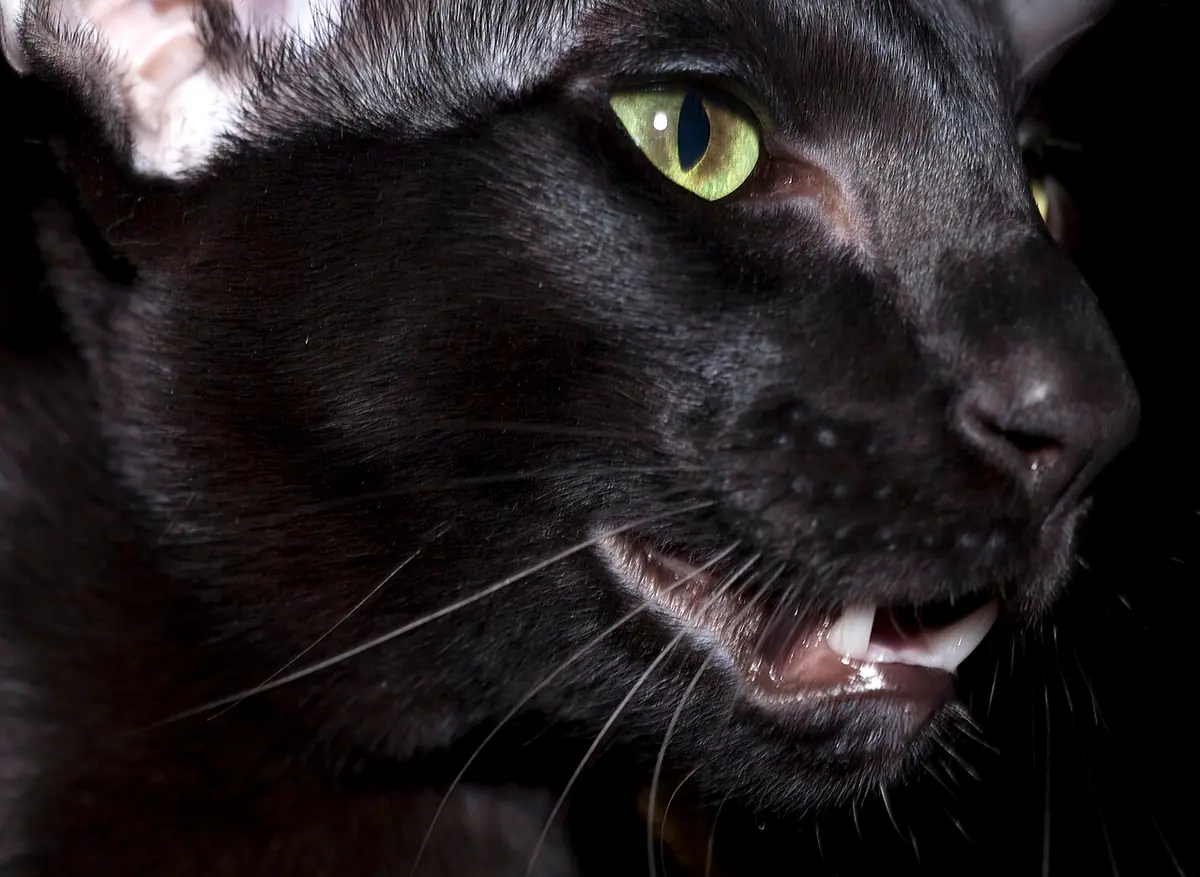
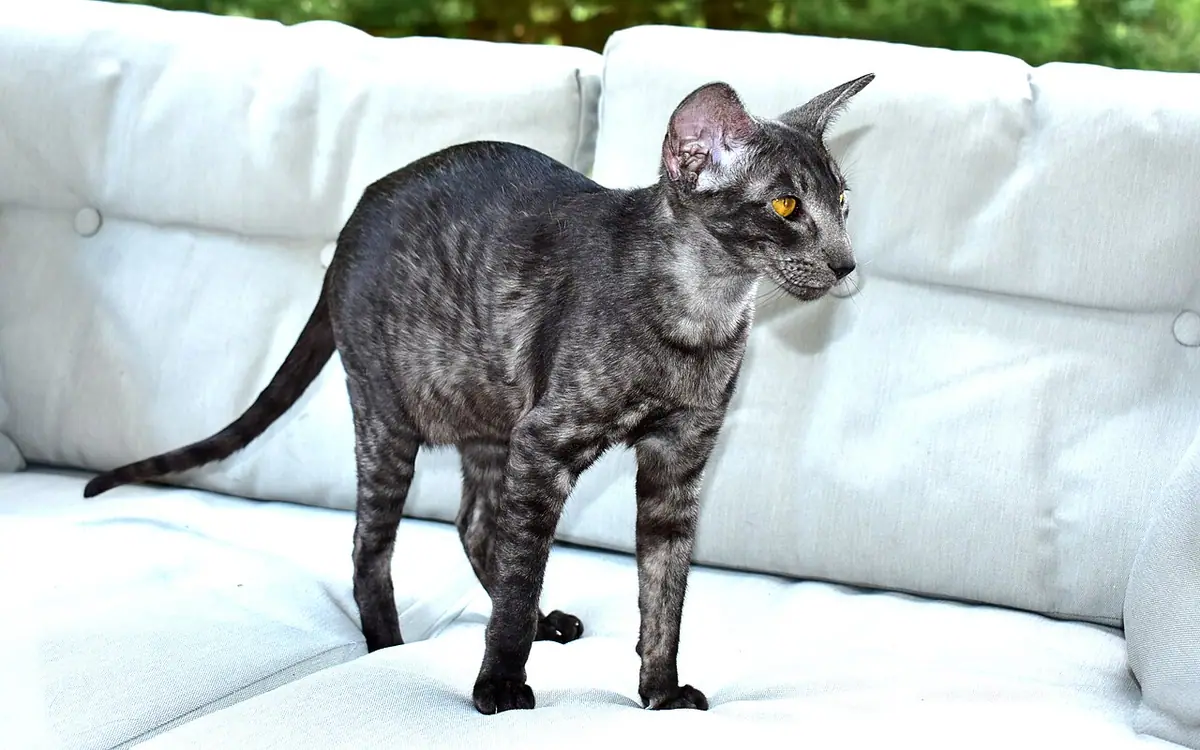

Photos: Wikimedia Commons - author & licence shown when enlarged and on the Photo credits page.
Temperament
Orientals are as intelligent as their Siamese ancestors [1]. They can be fairly vocal and needy, and they're unmistakably people-centred [1]. Everything you do fascinates them: they may inspect your toothbrush, help tie your shoes and choose your breakfast from the fridge [1]. Sit still and they'll settle in your lap, purring and nuzzling your chin [1]. Give them attention and they'll do anything to please you; withdraw it and they may pine [1]. They make wonderful family pets, moving easily from lap to lap [1].
Care
Health
- Progressive retinal atrophy (PRA (Progressive retinal atrophy): An inherited eye disease that slowly worsens sight and can lead to blindness. All terms ): can cause blindness; Recessive gene: The trait only shows when a cat gets the gene from both parents; carriers look normal. All terms and detectable by genetic testing [1].
- Amyloidosis: affects the liver and other organs; can be genetic or acquired, and research is ongoing. Ask breeders about any history in the kitten's lines [1].
- Lifespan: GCCF estimates 12–15 years [3]. We found no breed-specific longevity study.
Ask breeders about PRA testing and any amyloidosis history, and talk to your vet about any specific concern.
Don't confuse with…
- Siamese: same build, but always pointed with blue eyes [4].
- Cornish Rex: slender and big-eared, but with tight wavy curls [5].
- Havana Brown: mahogany brown, green eyes, head narrowing to a rounded muzzle [6].
Ask your vet. This information is for reference only and does not replace a veterinary diagnosis.
Cat facts
Frequently asked questions
How is an Oriental different from a Siamese?
In build they're alike: svelte, fine-boned, with a long wedge head and big ears [1]. The main difference is colour: the Siamese is always pointed with blue eyes [4], while the Oriental has over 600 colour, pattern and coat-length combinations [1].
Are Orientals vocal?
Yes. CFA (Cat Fanciers' Association): The world's largest registry of pedigree cats, based in the US. It keeps pedigree records, writes breed standards and runs cat shows. All terms says they're fairly vocal and want to share their thoughts on pretty much everything [1].
Is an Oriental OK with busy owners?
Not ideally. Given attention, they'll do anything to please; withdraw it and they may pine. CFA advises making sure you or your family can give enough attention before adopting [1].
Similar breeds


Breed photos: Wikimedia Commons (CC0 / CC BY / CC BY-SA) - authors & licences on the Photo credits page.
References
- CFA, Oriental (breed profile & standard)
- FIFe, Breeds (OSH Oriental Shorthair, OLH Oriental Longhair)
- GCCF, Cat Breeds (Oriental breed card)
- CFA, Siamese (breed profile & standard)
- CFA, Cornish Rex (breed profile & standard)
- CFA, Havana Brown (breed profile)
- VCA Animal Hospitals, Oriental (cat breed profile)
Accessed: 2026-10-02
CFA, TICA, FIFe and GCCF are the major cat registries in the US, Europe and the UK. See the glossary
Written by Catopedia from the sources above. Photos credit their author and licence under each image and on the Photo credits & licences.