Cat breed
Cornish Rex
Mèo Cornish Rex

CFA (Cat Fanciers' Association): The world's largest registry of pedigree cats, based in the US. It keeps pedigree records, writes breed standards and runs cat shows. All terms describes the Cornish Rex as the racy elegance of a greyhound paired with a clown's personality, dressed in curls [1]. Its close-lying marcel waves have no guard hairs at all, making the coat unbelievably soft [1]. Corneys are very active, intelligent and intensely devoted [1]. The breed is recognised by CFA, TICA (The International Cat Association): An international cat registry based in the US and one of the largest. It often recognizes newer breeds before CFA does. All terms [7], FIFe (Fédération Internationale Féline): The International Feline Federation, an umbrella body of cat clubs, mostly in Europe. All terms [2] and GCCF (Governing Council of the Cat Fancy): The UK's oldest pedigree cat registry (since 1910). All terms [3].
Contents (10 sections)
Quick facts
- Origin
- England (Cornwall, 1950)
- Weight
- ~2.3–4.5 kg
- Lifespan
- ~11–16 years
- Coat
- short, wavy
- Energy
- high
Details & sources
- Size
- Slim and fine-boned, with an arched back [1]
- Weight
- GCCF (Governing Council of the Cat Fancy): The UK's oldest pedigree cat registry (since 1910). All terms estimates about 5–10 lb (2.3–4.5 kg) [3]
- Lifespan
- Purina UK estimates 11–15 years [8]; GCCF estimates about 16 years [3]; no breed-specific longevity study found
- Coat
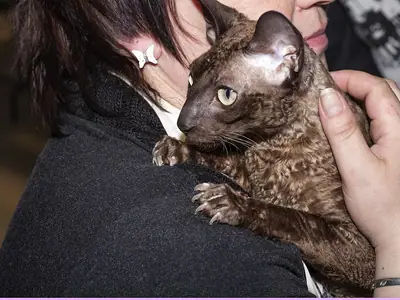
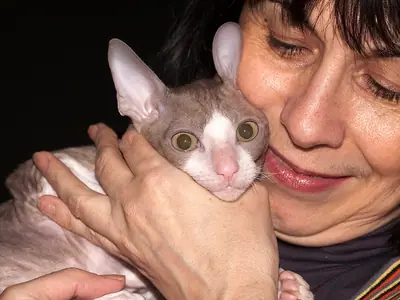
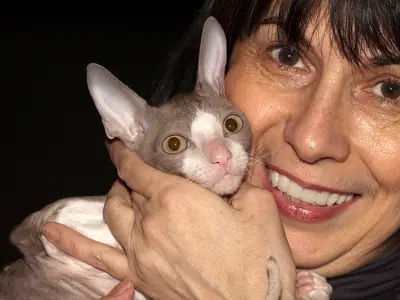
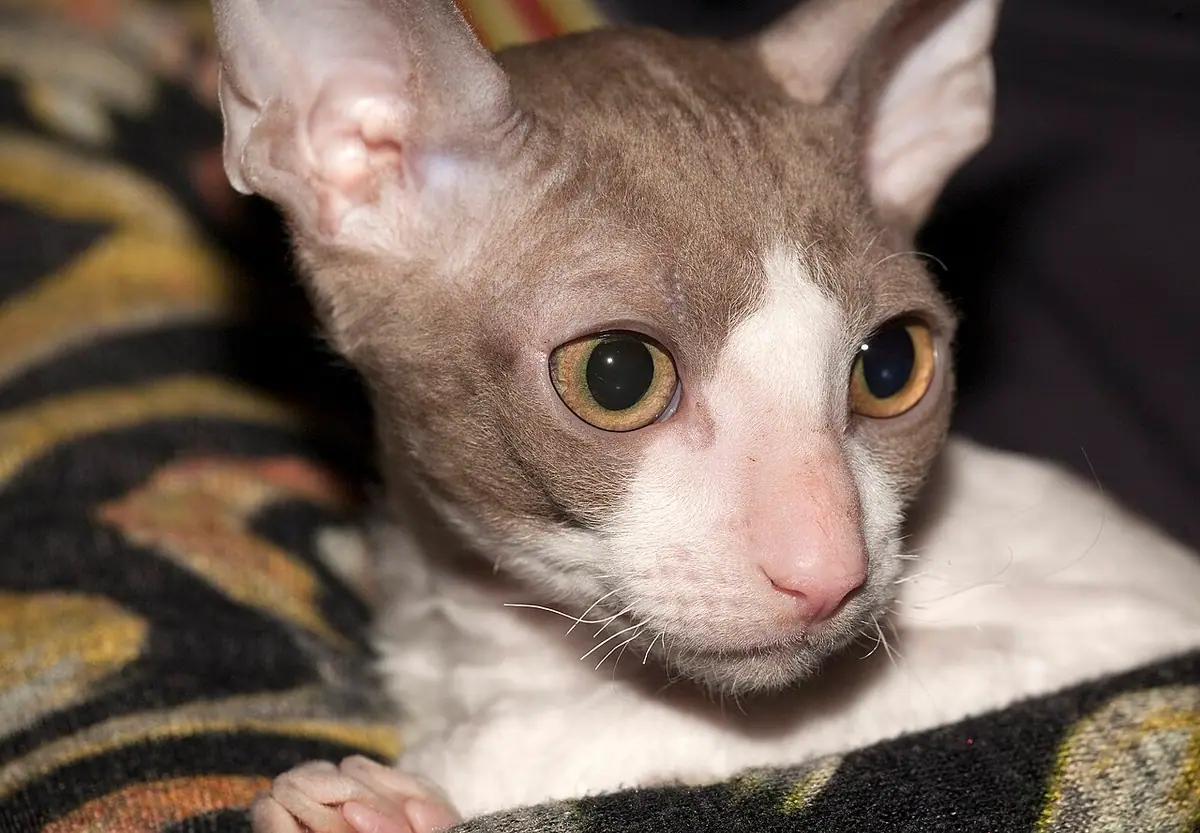
- Short, close-lying tight waves with no guard hairs at all, unbelievably soft [1]
Traits (scale 1–5)
- Energy
- 5/5
- Shedding
- 1/5
- Grooming needs
- 1/5
- Good with kids
- 5/5
- Vocal
- 2/5
- Independence
- 1/5
Basis: Editorial estimate based on CFA (Cat Fanciers' Association): The world's largest registry of pedigree cats, based in the US. It keeps pedigree records, writes breed standards and runs cat shows. All terms 's description, not a measurement
Recognized by major cat registries
Cat registries keep pedigree records and set the standard for each breed. Tap an abbreviation to see what it means.
| CFA (Cat Fanciers' Association): The world's largest registry of pedigree cats, based in the US. It keeps pedigree records, writes breed standards and runs cat shows. All terms US | Yes |
|---|---|
| TICA (The International Cat Association): An international cat registry based in the US and one of the largest. It often recognizes newer breeds before CFA does. All terms international, US-based | Yes |
| FIFe (Fédération Internationale Féline): The International Feline Federation, an umbrella body of cat clubs, mostly in Europe. All terms Europe | Yes |
| GCCF (Governing Council of the Cat Fancy): The UK's oldest pedigree cat registry (since 1910). All terms UK | Yes |
History
In 1950 a curly-coated cream male kitten, Kallibunker, turned up in a litter of barn cats on Nina Ennismore's farm in Cornwall, England [1]. After consulting her vet and a geneticist, she bred him back to his mother and got two more curly kittens [1]. Having kept Rex rabbits, she gave the new cat breed the same name [1]. Crosses with Burmese, Siamese and British Shorthairs showed the mutation was Recessive gene: The trait only shows when a cat gets the gene from both parents; carriers look normal. All terms [1]. A California breeder bought a pair in 1956 to start the breed in the US; CFA accepted it for registration in 1962 and for championship two years later [1].
Appearance
Photo gallery
7 photos · tap to enlarge- (enlarge, photo 1/7)
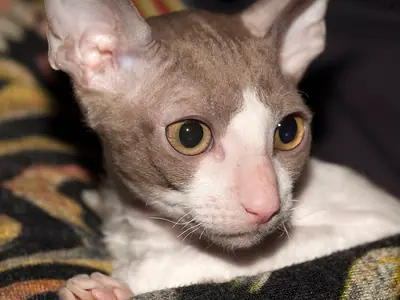
- (enlarge, photo 2/7)
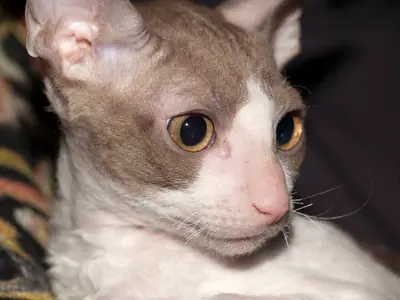
- (enlarge, photo 3/7)
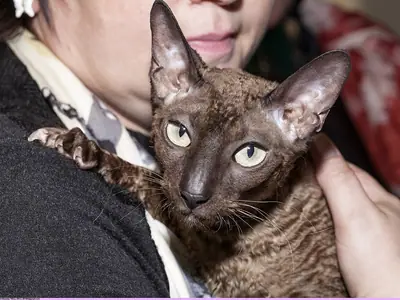
- (enlarge, photo 4/7)
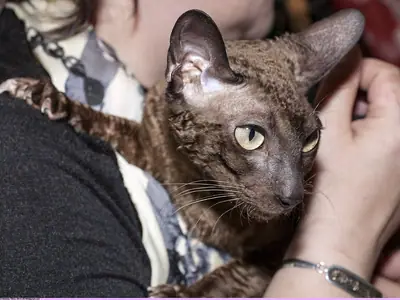
- (enlarge, photo 5/7)
- (enlarge, photo 6/7)
- (enlarge, photo 7/7)
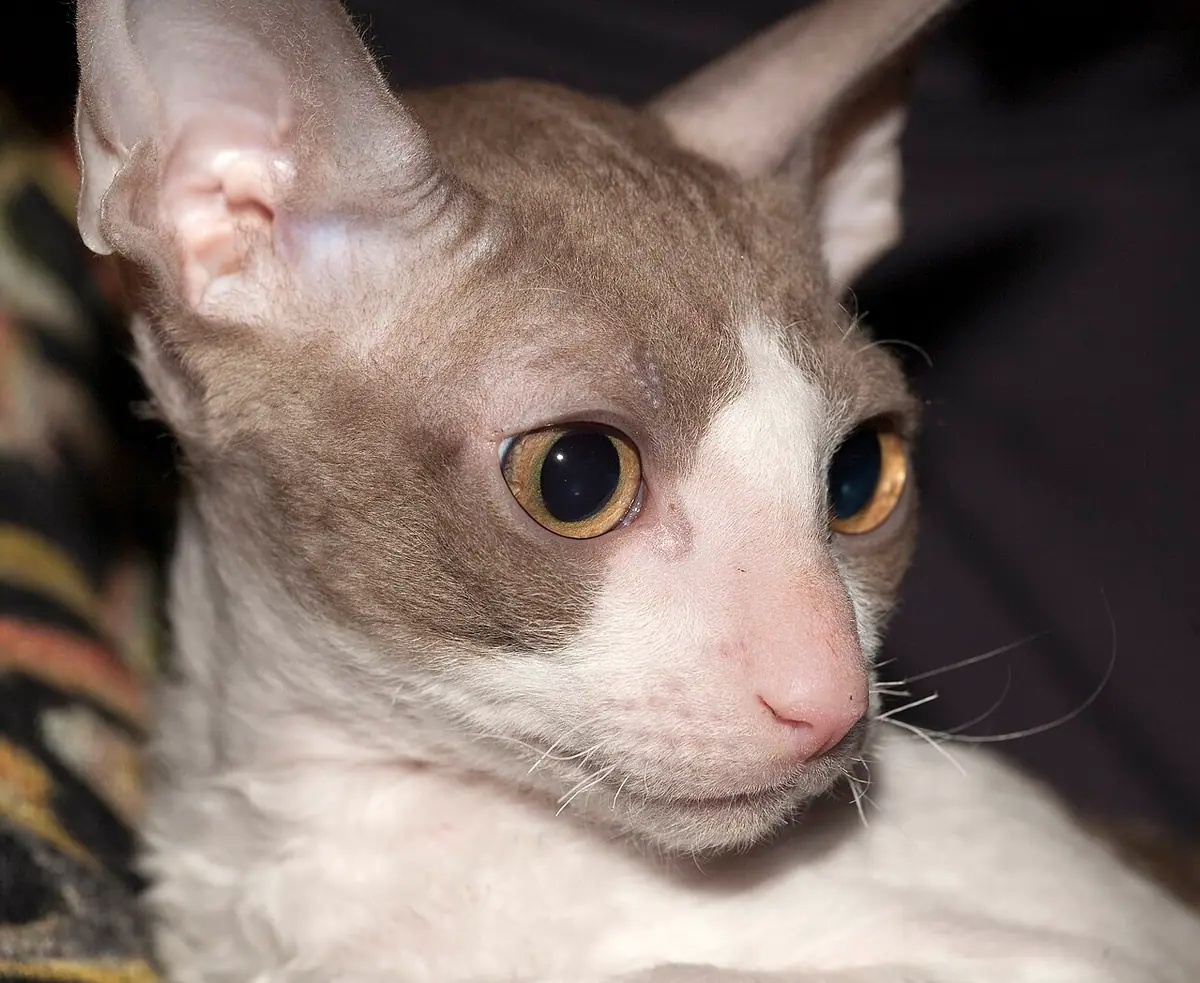
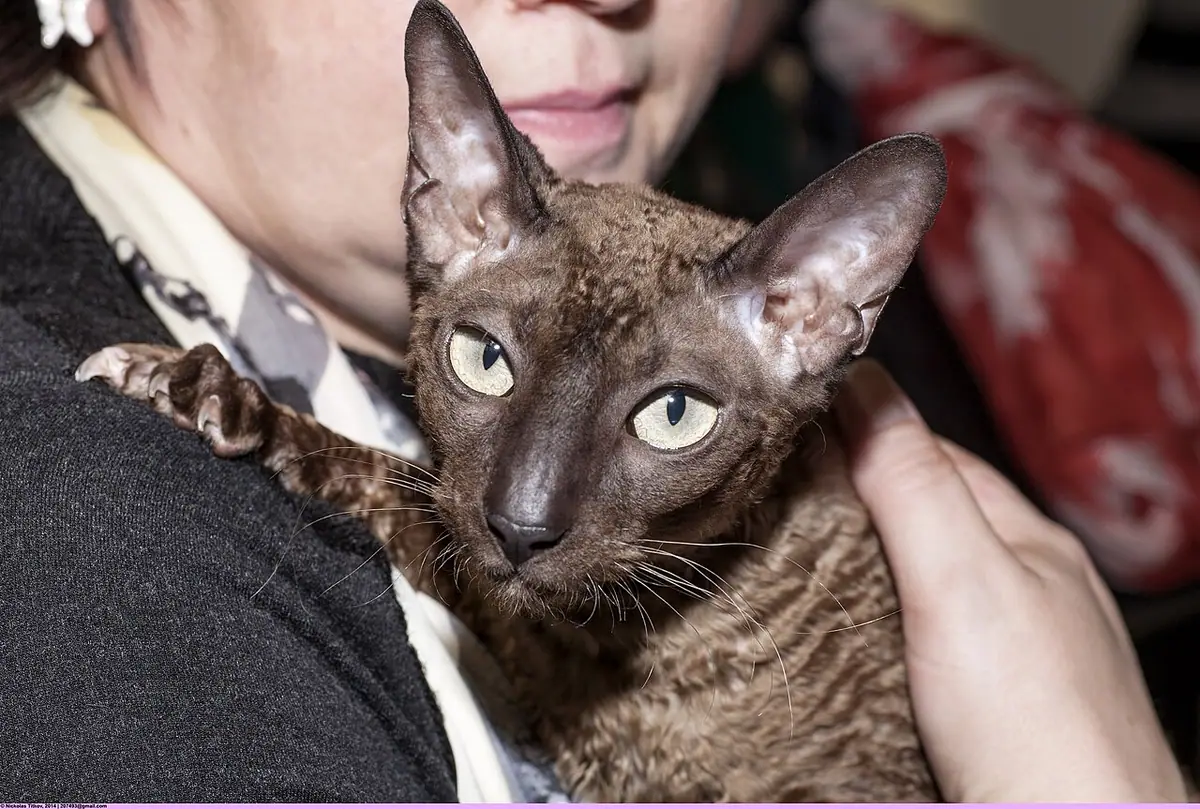
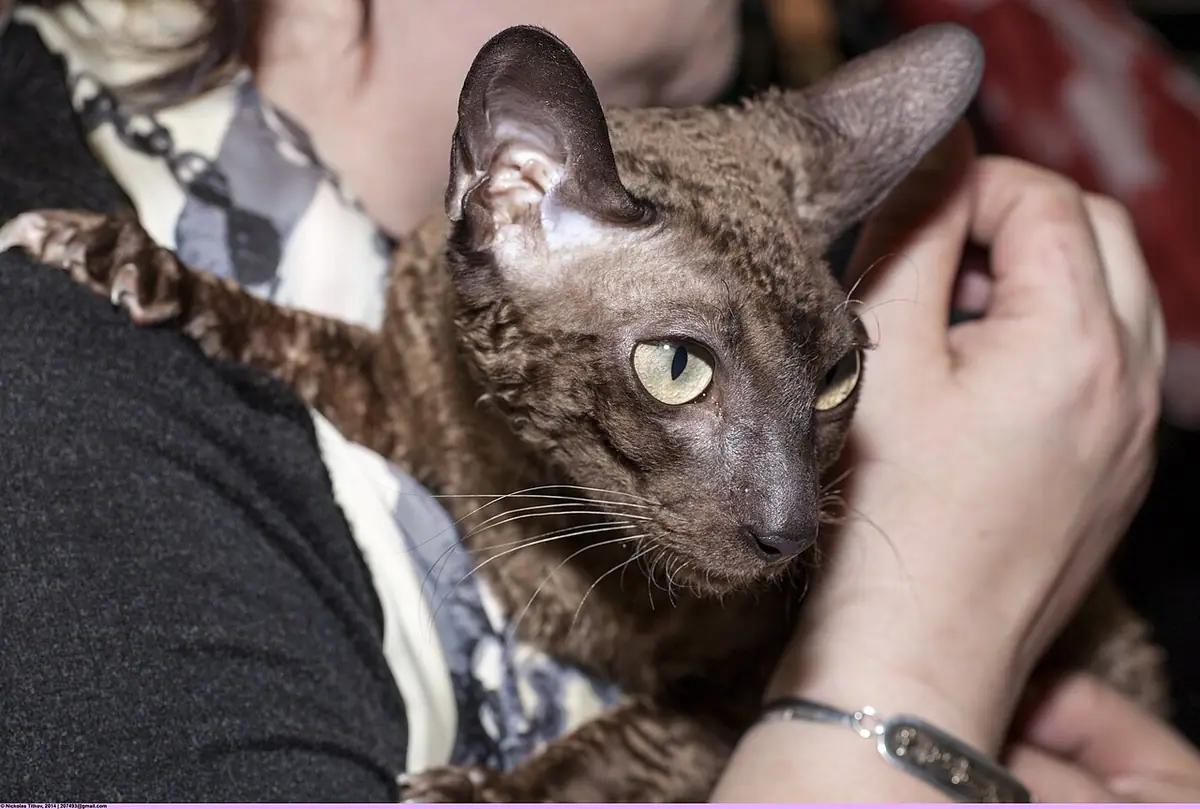
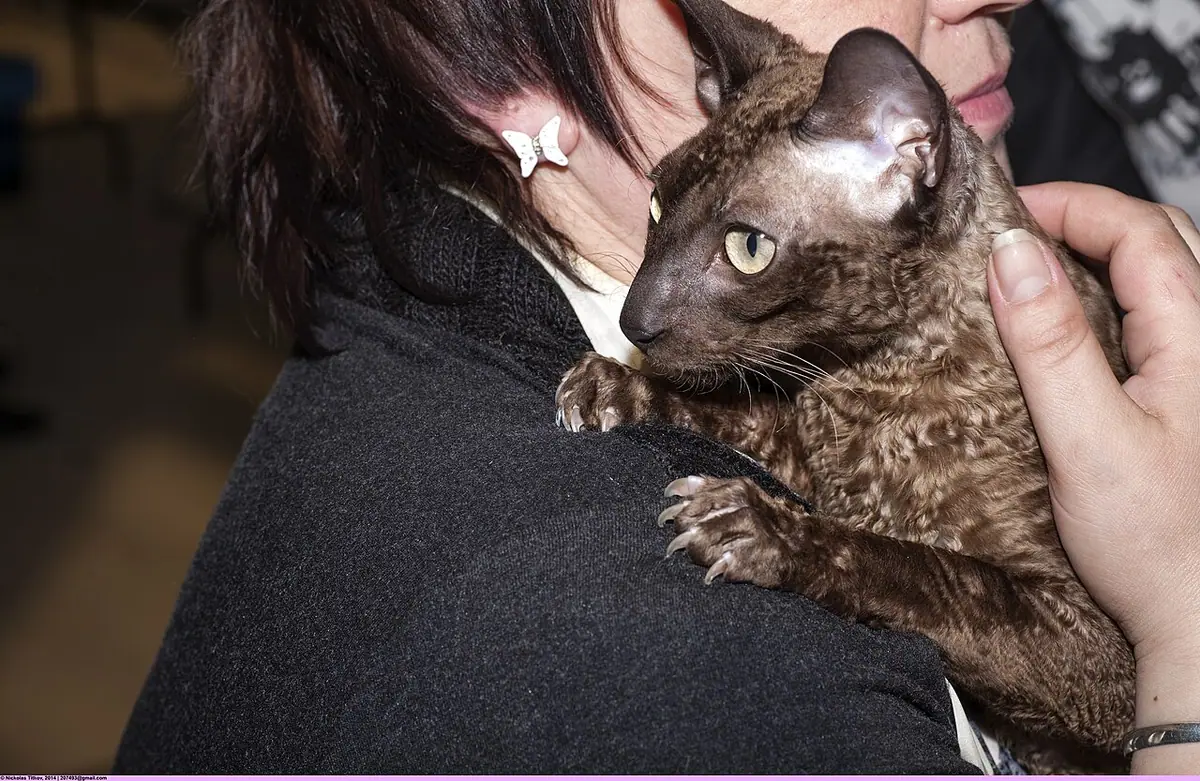
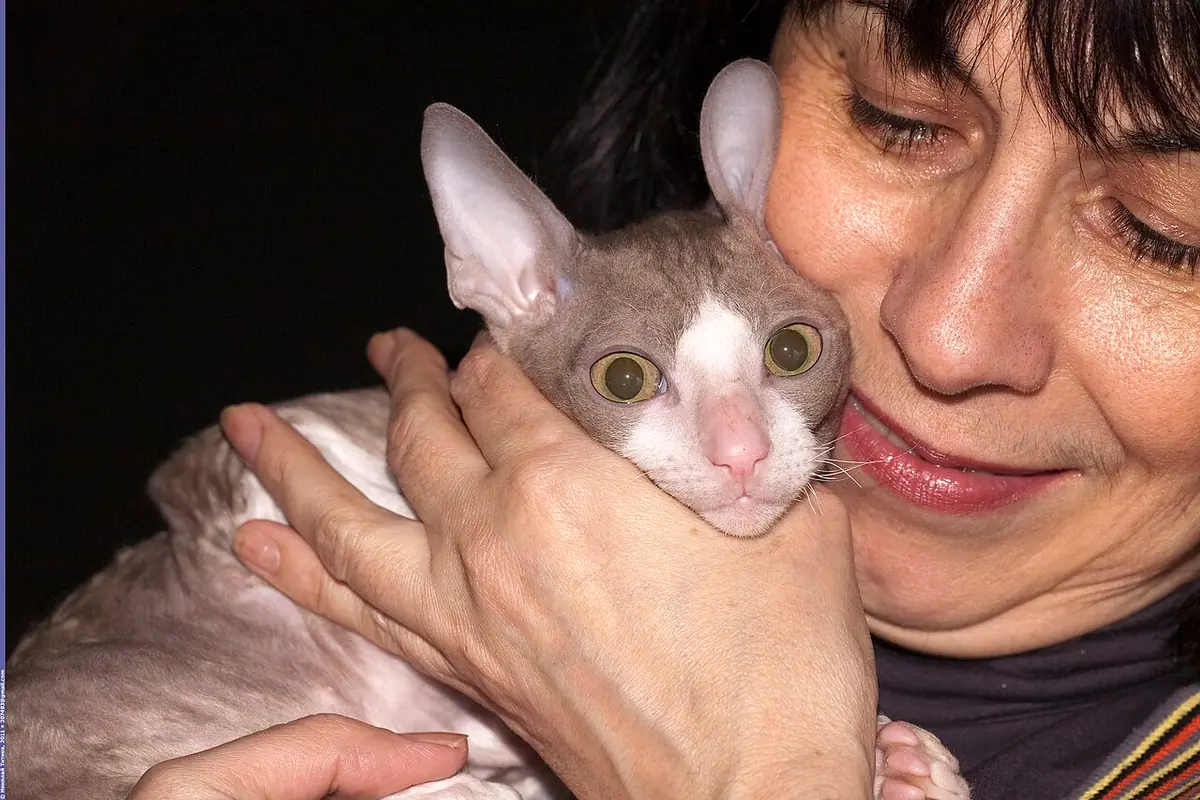
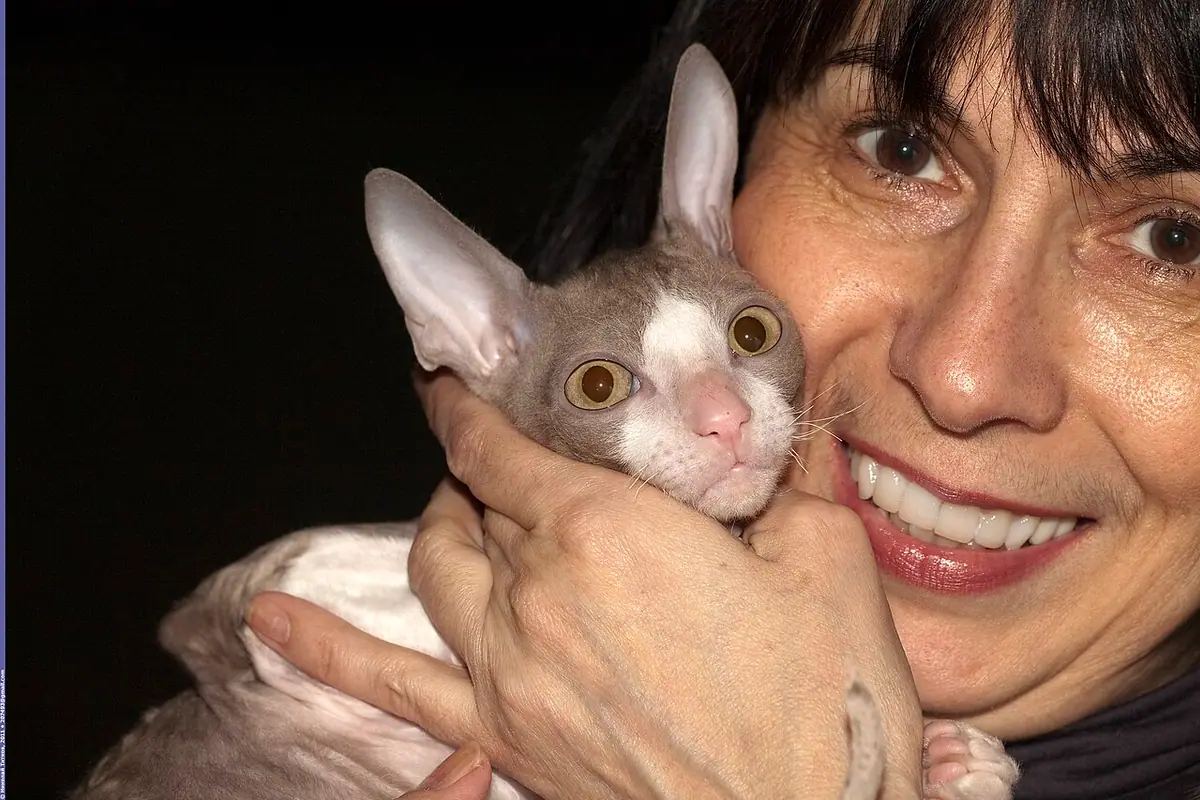
.jpg)
Photos: Wikimedia Commons - author & licence shown when enlarged and on the Photo credits page.
Temperament
Cornish Rex are extremely intelligent, adaptable and adventurous, and they love to travel [1]. They're also devoted, often called "Velcro kitties" for their need for physical contact with their person [1]. Their energy means a constant hunt for new playthings, appropriate or not, so put fragile things away [1]. Children and adults enjoy their antics, and dogs get a willing playmate [1]. They'll chat, but not loudly or needlessly [1].
Care
- Coat: no regular combing needed. Bathe occasionally if the coat gets greasy; towel-dry and never blow-dry [1].
- Ears: wax builds up faster than in other breeds; clean often with a cotton ball or swab [1].
- Warmth and sun: they chill easily and can sunburn [1].
- Food: big appetites despite slim builds [1].
Health
- Inherited conditions: CFA describes a sturdy breed with none [1].
- Skin and coat: the guard-hair-free coat is fragile and may not protect against sun; they chill easily [1].
- Ears: wax builds up quickly; clean often [1].
- Lifespan: GCCF estimates about 16 years [3]. We found no breed-specific longevity study. Purina UK estimates 11–15 years [8].
This is general information; talk to your vet about any specific concern.
Don't confuse with…
- Devon Rex: a few guard hairs, looser waves, huge low-set ears [4].
- Selkirk Rex: sturdy, with thick loose curls [5].
- Oriental Shorthair: slender and big-eared, but straight-coated [6].
Ask your vet. This information is for reference only and does not replace a veterinary diagnosis.
Cat facts
Frequently asked questions
Does a Cornish Rex need a sweater?
It may help. With no guard hairs they chill easily in cold weather, and CFA (Cat Fanciers' Association): The world's largest registry of pedigree cats, based in the US. It keeps pedigree records, writes breed standards and runs cat shows. All terms suggests a sweater. The thin coat may not protect against sun either [1].
How is a Cornish Rex different from a Devon Rex?
The Cornish has no guard hairs, tight even waves, a slender arched body, an egg-shaped head and a Roman nose [1]. The Devon has a few guard hairs, a looser wave and huge low-set ears [4]. They carry different mutations [4].
Does a Cornish Rex need brushing?
Regular combing isn't needed. Occasional baths help if the coat gets greasy; towel-dry thoroughly and never use a blow dryer [1].
Similar breeds

Breed photos: Wikimedia Commons (CC0 / CC BY / CC BY-SA) - authors & licences on the Photo credits page.
References
- CFA, Cornish Rex (breed profile & standard)
- FIFe, Breeds (CRX Cornish Rex, fully recognised)
- GCCF, Cat Breeds (Cornish Rex breed card)
- CFA, Devon Rex (breed profile & standard)
- CFA, Selkirk Rex (breed profile & standard)
- CFA, Oriental (breed profile & standard)
- TICA, Browse All Breeds (Cornish Rex listed)
- Purina UK, Cornish Rex cat breed information
Accessed: 2026-10-02
CFA, TICA, FIFe and GCCF are the major cat registries in the US, Europe and the UK. See the glossary
Written by Catopedia from the sources above. Photos credit their author and licence under each image and on the Photo credits & licences.