Cat breed · Iran
Persian
Mèo Ba Tư

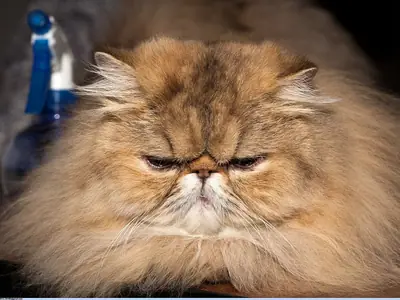
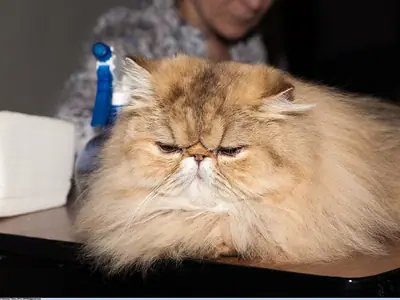
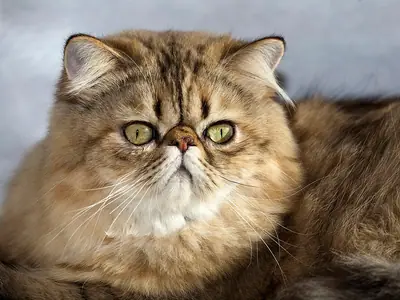
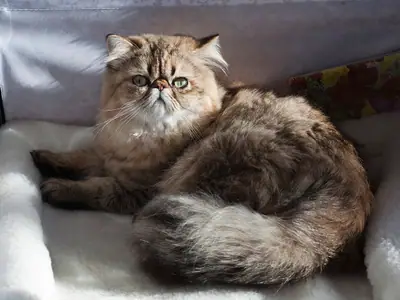
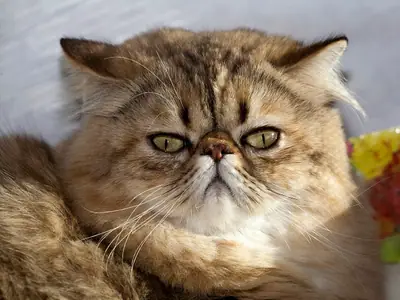
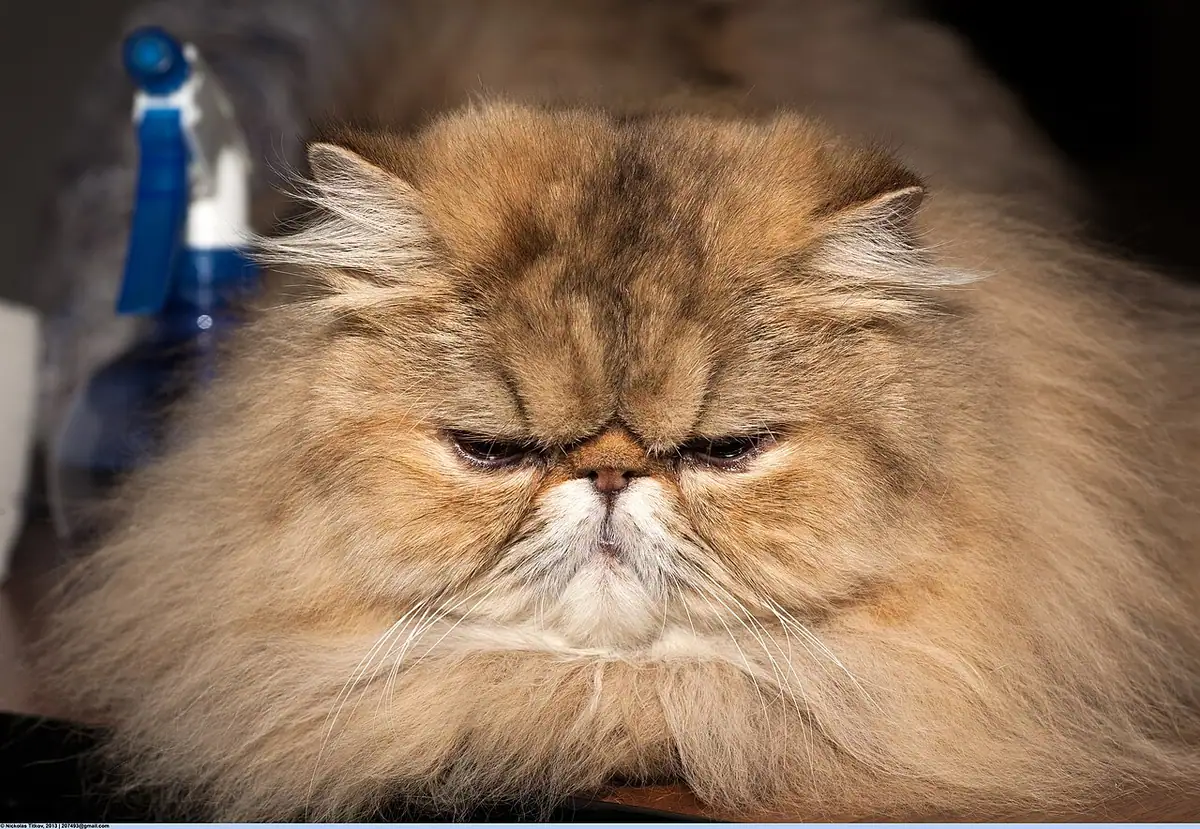
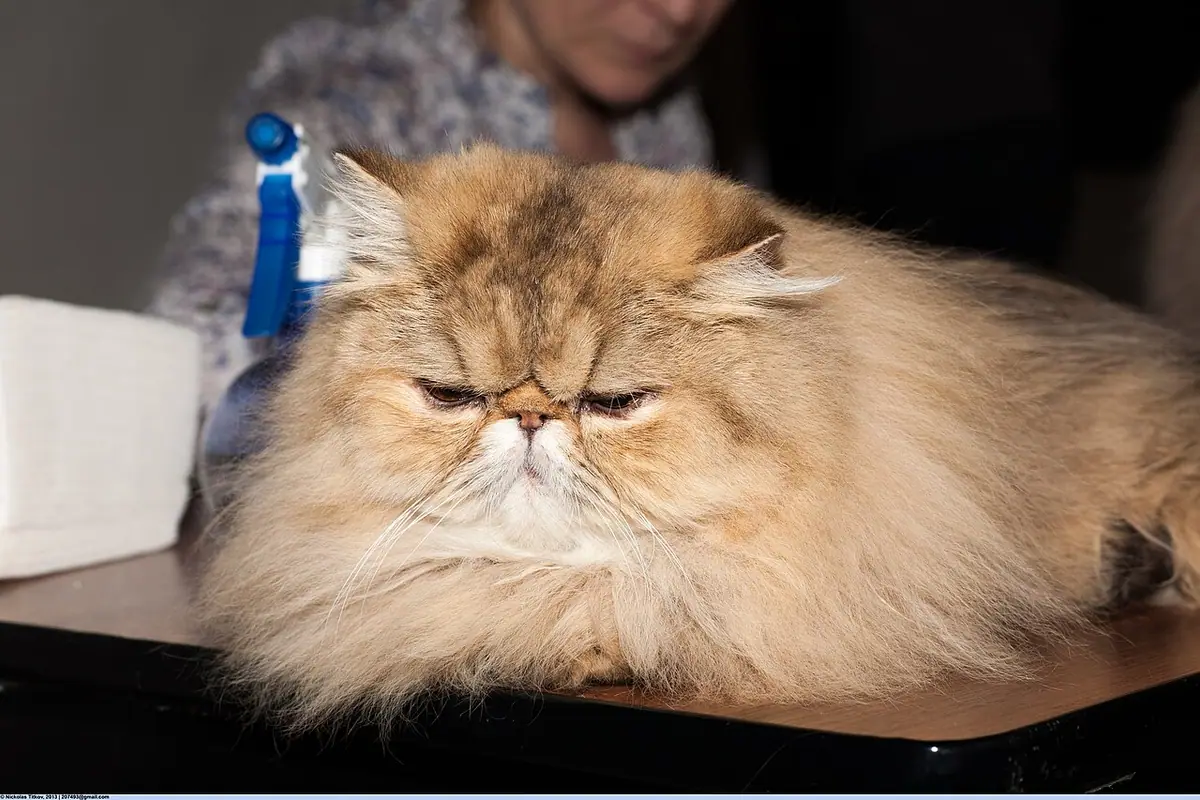
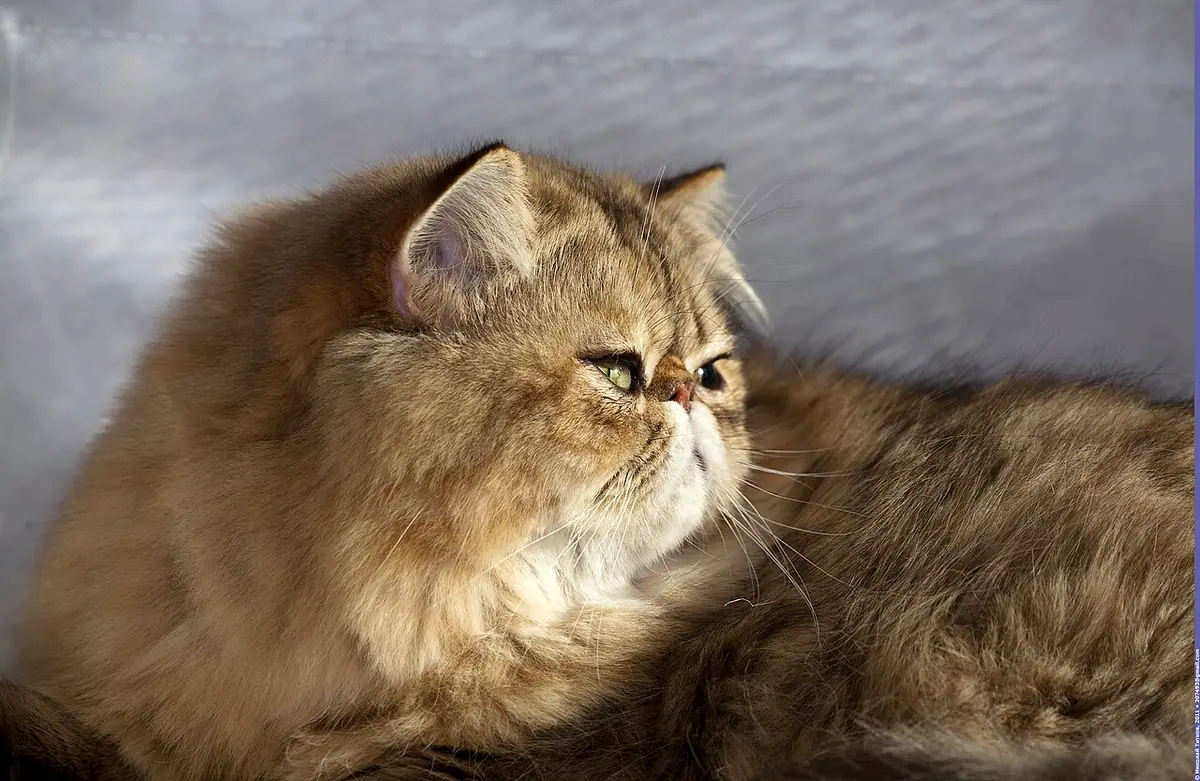
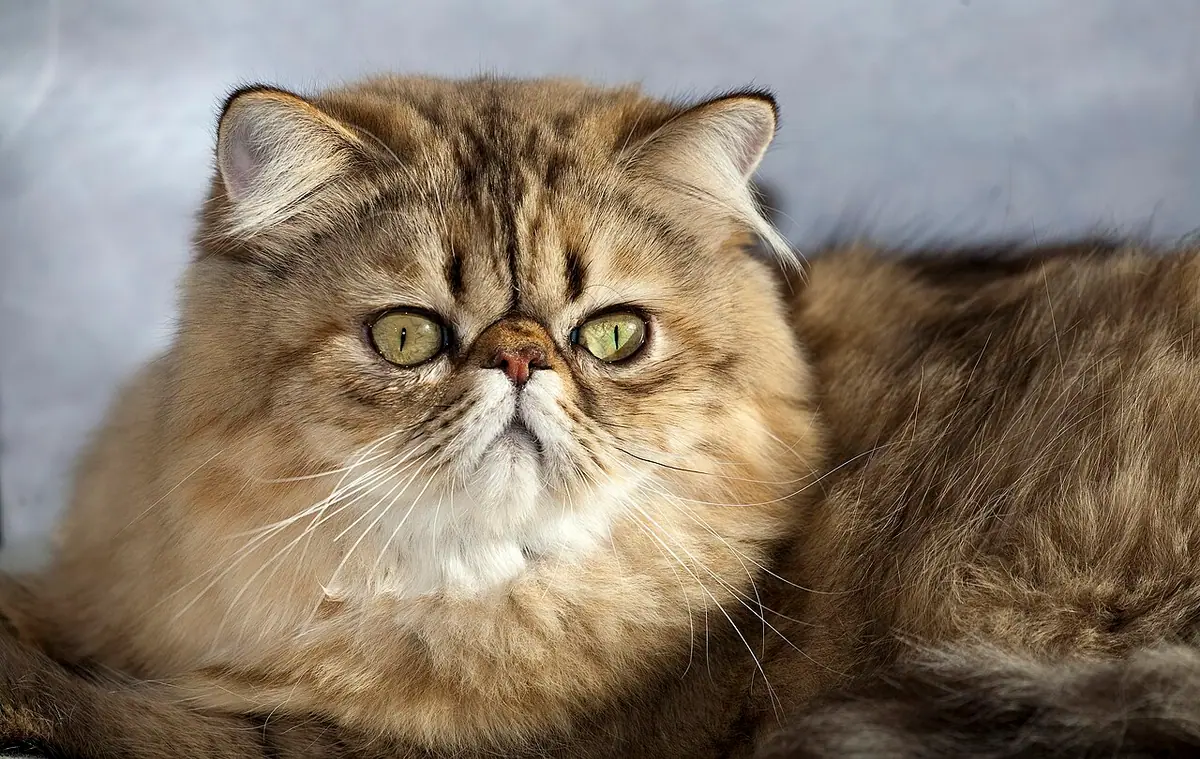
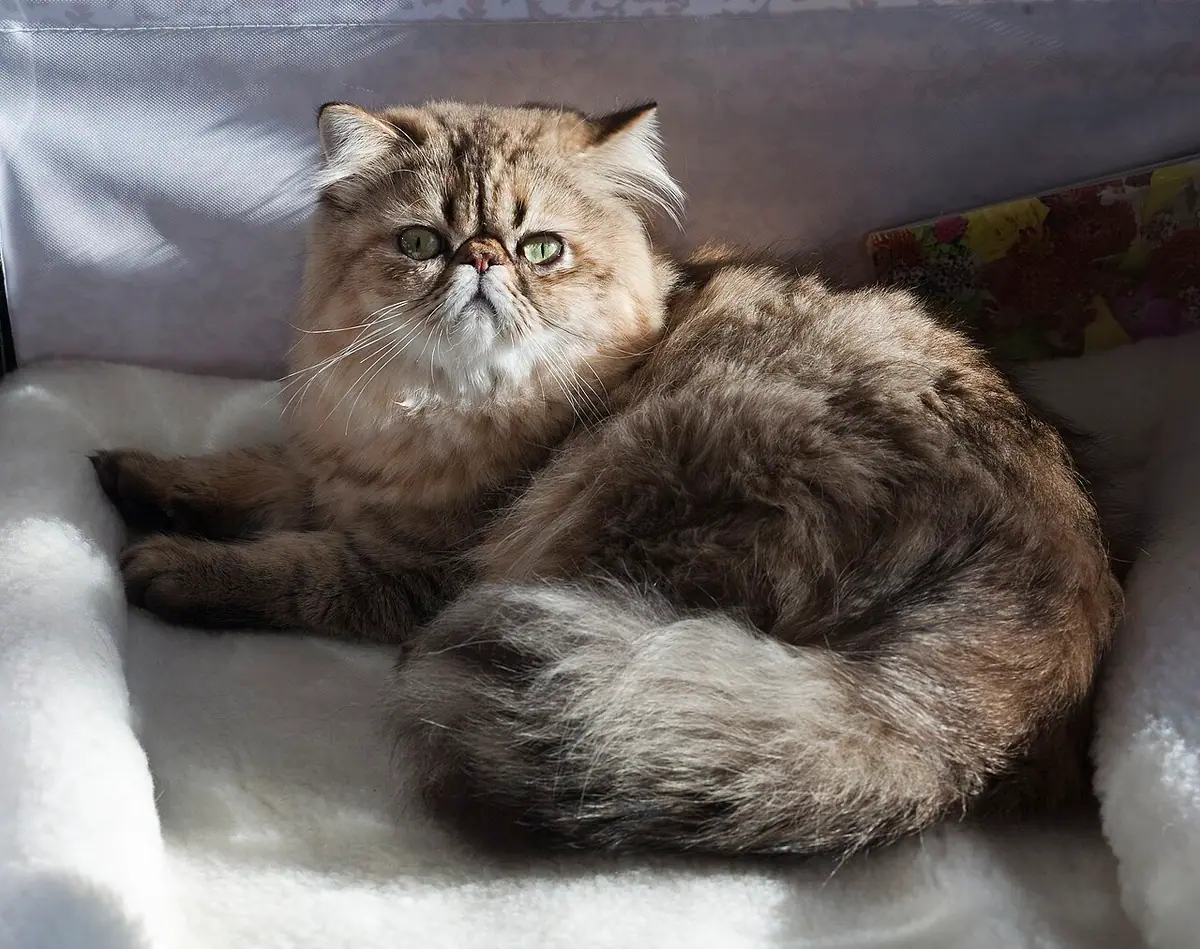
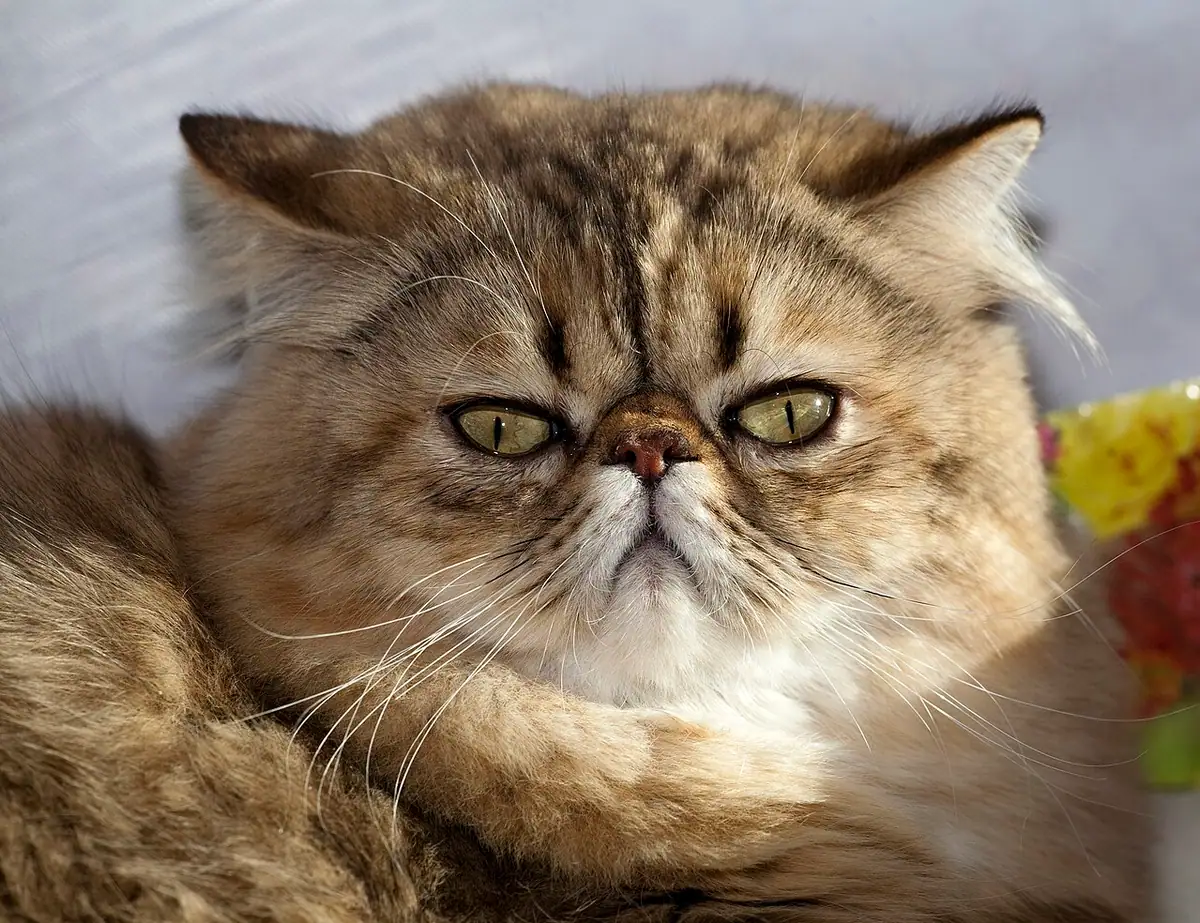
The Persian is the classic glamour cat, with a long flowing coat, a flat round face and huge eyes [1]. CFA (Cat Fanciers' Association): The world's largest registry of pedigree cats, based in the US. It keeps pedigree records, writes breed standards and runs cat shows. All terms 's standard asks for everything to be round: head, eyes, muzzle, body, even the ear tips [1]. Persians are placid, quiet and happier being fussed over than racing around [1]. The breed ranks third in CFA registrations [5] and was eighth at the UK's GCCF (Governing Council of the Cat Fancy): The UK's oldest pedigree cat registry (since 1910). All terms in 2025 [7]. That coat takes real work, and there are a few breed health issues worth knowing before you commit. Please read the health and welfare note below.
Contents (10 sections)
Quick facts
- Origin
- Named after Persia (modern Iran); developed as a breed in Europe and the US
- Weight
- ~3.2–5.4 kg
- Lifespan
- ~10–16 years
- Coat
- long, thick
- Energy
- low
Details & sources
- Size
- Medium, solidly built and Cobby: A short, compact, sturdy body with a broad chest and short legs. All terms , heavily boned [1]
- Weight
- Purina UK gives about 3.2–5.4 kg [13]; mean adult bodyweight of Persians at UK vet practices was 3.9 kg (SD 0.9 kg) [2]
- Lifespan
- Median: The middle value: half the cats lived shorter than this, half lived longer. All terms longevity 13.5 years (Interquartile range: The middle spread of the data: the middle half of the cats fall in this range. All terms 9.9–16.0) in UK VetCompass: A Royal Veterinary College research programme that studies anonymised records from hundreds of UK vet clinics. All terms data from 2013 [2]; that is, roughly 10–16 years for the middle half of cats
- Coat
- Long, thick and full [1]
Traits (scale 1–5)
- Energy
- 1/5
- Shedding
- 4/5
- Grooming needs
- 5/5
- Good with kids
- 4/5
- Vocal
- 1/5
- Independence
- 3/5
Basis: Editorial estimate based on CFA (Cat Fanciers' Association): The world's largest registry of pedigree cats, based in the US. It keeps pedigree records, writes breed standards and runs cat shows. All terms 's description, not a measurement
Recognized by major cat registries
Cat registries keep pedigree records and set the standard for each breed. Tap an abbreviation to see what it means.
| CFA (Cat Fanciers' Association): The world's largest registry of pedigree cats, based in the US. It keeps pedigree records, writes breed standards and runs cat shows. All terms US | Yes |
|---|---|
| TICA (The International Cat Association): An international cat registry based in the US and one of the largest. It often recognizes newer breeds before CFA does. All terms international, US-based | - |
| FIFe (Fédération Internationale Féline): The International Feline Federation, an umbrella body of cat clubs, mostly in Europe. All terms Europe | Yes |
| GCCF (Governing Council of the Cat Fancy): The UK's oldest pedigree cat registry (since 1910). All terms UK | Yes |
History
The name reflects the breed's presumed homeland, Persia, but nobody knows exactly how these cats reached western Europe [1]. In 1626 the Italian traveller Pietro della Valle returned from Persia with a heavily coated longhaired cat that was quite unlike the Turkish Angora arriving at the same time. The two were combined to produce a sturdy, short-nosed cat with a silky but dense coat [1]. When cat shows took off in the early 1900s, Persians dominated. The first ones reached the US in the late 1880s, and the Persian was one of CFA's six foundation breeds in 1906 [1]. FIFe (Fédération Internationale Féline): The International Feline Federation, an umbrella body of cat clubs, mostly in Europe. All terms has recognised it since its own founding in 1949 [6].
Appearance
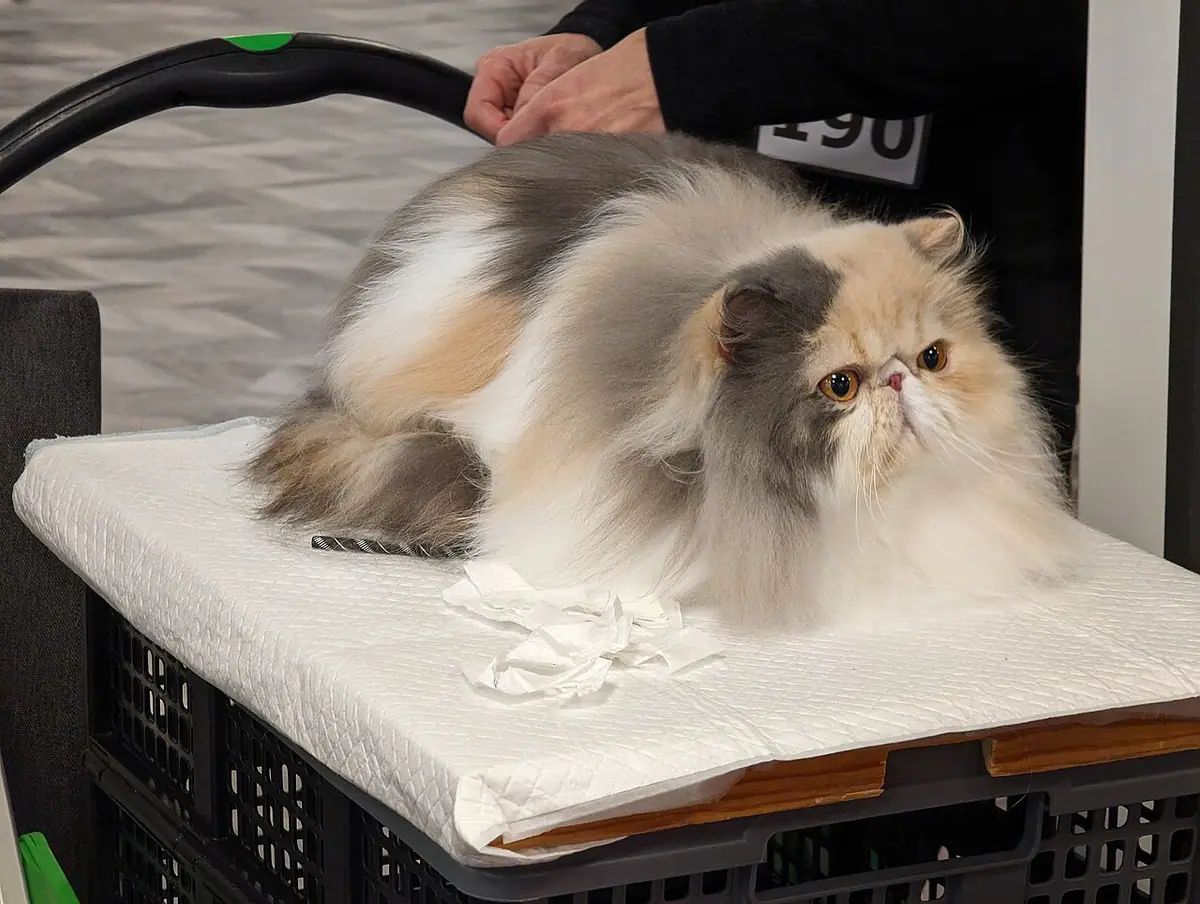
- Body: the textbook "Cobby: A short, compact, sturdy body with a broad chest and short legs. All terms " type, broad-chested and muscular, on short, heavy-boned legs often likened to tree trunks. The plumed tail is short [1].
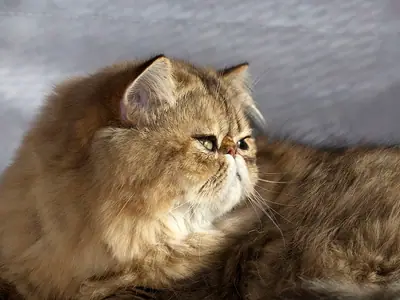
- Head: round and massive, with a short, snub, broad nose. In profile, forehead, nose and chin line up vertically [1].
- Eyes and ears: large round eyes set wide apart, small ears [1].
- Coat: long and thick, softening every line [1].
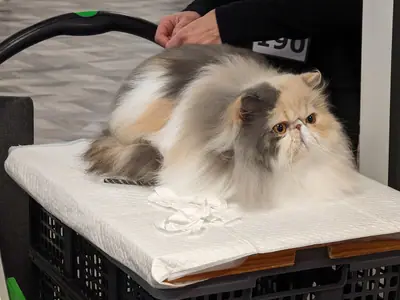
- Colours: so many that CFA groups them into seven show divisions: solid, tabby, silver and golden, shaded and smoke, parti-colour, calico and bicolour, and Himalayan (pointed) [1].
- Weight: adult Persians at UK vet practices averaged 3.9 kg [2].
Photo gallery
7 photos · tap to enlarge- (enlarge, photo 1/7)
- (enlarge, photo 2/7)
- (enlarge, photo 3/7)
- (enlarge, photo 4/7)
- (enlarge, photo 5/7)
- (enlarge, photo 6/7)
- (enlarge, photo 7/7)
.jpg)
Photos: Wikimedia Commons - author & licence shown when enlarged and on the Photo credits page.
Temperament
Persians are playful but placid. You can tempt one into chasing a toy, but most would rather just receive attention from their people [1]. This isn't a cat that raids the kitchen counter or climbs the curtains; Persians like to keep their feet on the ground [1]. Their even temper and devotion make them good with children of all ages and with other pets [1]. Because kittens must learn to sit for grooming, the breed is considered easy to train, and many learn "no" and their own names [1].
Care
- Comb regularly with a steel or Teflon-coated comb with coarse and fine teeth to keep mats away. Many owners use a professional groomer [1].
- Clean the eyes with a soft, damp cloth, as the large eyes can water and stain [1].
- Bathe occasionally, but only after a thorough comb-out and nail trim [1].
- Teeth and nails: periodontal disease and overgrown nails are among the most common problems in UK Persians [2], so check them regularly.
- Get a good vacuum cleaner. CFA is blunt that Persian ownership means regular vacuuming [1].
Health
- Polycystic kidney disease (PKD (Polycystic kidney disease): Inherited kidney disease where fluid-filled cysts grow in the kidneys; a gene test exists. All terms ): a Dominant gene: One copy from either parent is enough for the trait to show. All terms inherited disease. A 2004 study estimated it affected about 38% of Persians worldwide and identified the PKD1 mutation that made a DNA test possible [3]. CFA says testing and neutering affected cats now keep it well controlled [1].
- Coat, teeth, nails and eyes: among 3,235 UK Persians, the commonest problems were haircoat disorders (12.7%), periodontal disease (11.3%), overgrown nails (7.2%) and ocular discharge (5.8%) [2].
- Breathing and the flat face: CFA notes that very small nostrils once caused breathing problems in some lines [1]. A study based on about 1,000 owner questionnaires found that flatter faces (a lower-set nose) were associated with more owner-reported respiratory signs [4].
- Kidney disease was the most commonly recorded cause of death (23.4%) [2].
- Lifespan: a Median: The middle value: half the cats lived shorter than this, half lived longer. All terms of 13.5 years in UK data [2]. The middle half of cats lived roughly 10–16 years [2].
Ask breeders for the parents' PKD test results, and talk to your vet about any specific concern.
Don't confuse with…
- Himalayan: a Persian with the pointed pattern and blue eyes. CFA treats it as part of the Persian breed [1]; TICA (The International Cat Association): An international cat registry based in the US and one of the largest. It often recognizes newer breeds before CFA does. All terms lists it separately [10].
- Exotic Shorthair: the same structure and face with a shorter, plush coat [8].
- British Longhair: round-faced but not flat-faced.
- Turkish Angora: often white and longhaired too, but slender, with a wedge-shaped head and big ears [9].
Ask your vet. This information is for reference only and does not replace a veterinary diagnosis.
Cat facts
Frequently asked questions
Are Persian cats hard to look after?
They need more care than most breeds. CFA (Cat Fanciers' Association): The world's largest registry of pedigree cats, based in the US. It keeps pedigree records, writes breed standards and runs cat shows. All terms recommends regular combing with a metal comb to prevent mats, wiping the eyes with a soft damp cloth, and occasional baths after a thorough comb-out. Train kittens to accept grooming early [1].
Do flat-faced Persians have breathing problems?
They can. CFA says very small nostrils once caused breathing problems in some lines, and breeders removed those cats from breeding [1]. A study based on about 1,000 owner questionnaires found flatter faces were associated with more owner-reported respiratory signs [4]. If your cat breathes noisily or with effort, see a vet.
How long do Persian cats live?
In UK vet-practice data, Persians had a Median: The middle value: half the cats lived shorter than this, half lived longer. All terms longevity of 13.5 years, with the middle half between 9.9 and 16.0 years. Females lived slightly longer than males [2].
Are Persians and Himalayans the same breed?
It depends on the registry. CFA treats the Himalayan as the pointed colour division of the Persian [1], while TICA (The International Cat Association): An international cat registry based in the US and one of the largest. It often recognizes newer breeds before CFA does. All terms lists it as a separate breed [10]. In build and care needs they're essentially the same.
Similar breeds

Breed photos: Wikimedia Commons (CC0 / CC BY / CC BY-SA) - authors & licences on the Photo credits page.
References
- CFA, Persian (breed profile & standard)
- O'Neill DG et al. (2019). Persian cats under first opinion veterinary care in the UK: demography, mortality and disorders. Sci Rep 9:12952
- Lyons LA et al. (2004). Feline polycystic kidney disease mutation identified in PKD1. J Am Soc Nephrol 15(10):2548–2555
- Farnworth MJ et al. (2016). Flat feline faces: is brachycephaly associated with respiratory abnormalities in the domestic cat (Felis catus)? PLoS ONE 11(8):e0161777
- CFA, Most Popular Breeds for 2026 (Persian #3, based on 2025 registrations)
- FIFe, Breeds (PER Persian; recognised since 1949)
- GCCF, Registered Cats By Breed 2024–2025 (PDF; read via search-index copy, re-verify)
- CFA, Exotic (breed profile & standard)
- CFA, Turkish Angora (breed profile & standard)
- TICA, Browse All Breeds (Himalayan listed as a breed)
- International Cat Care, Persian cats and brachycephaly (updated 26 Sep 2025)
- iCatCare and iCatCare Veterinary Society International Partners, Feline conformational health and welfare in cat breeding (position statement, 2025)
- Purina UK, Persian cat breed information
Accessed: 2026-10-02
CFA, TICA, FIFe and GCCF are the major cat registries in the US, Europe and the UK. See the glossary
Written by Catopedia from the sources above. Photos credit their author and licence under each image and on the Photo credits & licences.