Cat breed · Tsardom of Russia
Siberian
Mèo Siberia

The Siberian is Russia's native forest cat and is considered the country's national cat [1]. It's powerful and muscular, with a thick triple coat built for Russian winters [1]. Siberians are intelligent, curious, easygoing and quiet [1]. The breed is recognised by CFA (Cat Fanciers' Association): The world's largest registry of pedigree cats, based in the US. It keeps pedigree records, writes breed standards and runs cat shows. All terms , TICA (The International Cat Association): An international cat registry based in the US and one of the largest. It often recognizes newer breeds before CFA does. All terms [7], FIFe (Fédération Internationale Féline): The International Feline Federation, an umbrella body of cat clubs, mostly in Europe. All terms [2] and GCCF (Governing Council of the Cat Fancy): The UK's oldest pedigree cat registry (since 1910). All terms [3]. The popular claim that Siberians are hypoallergenic isn't backed by strong evidence yet [4].
Contents (10 sections)
Quick facts
- Origin
- Russia (native forest cat)
- Weight
- ~3.6–8.2 kg
- Lifespan
- ~12–15 years
- Coat
- thick, triple
- Energy
- moderate
Details & sources
- Size
- Medium to medium-large, with surprising heft [1]
- Weight
- Mature males about 12–18 lb (5.4–8.2 kg); females 8–12 lb (3.6–5.4 kg) [1]
- Lifespan
- GCCF (Governing Council of the Cat Fancy): The UK's oldest pedigree cat registry (since 1910). All terms estimates 12–15 years [3]; no breed-specific longevity study found
- Coat
- Thick triple coat, noticeably fuller in cold months and thinner in summer [1]
Traits (scale 1–5)
- Energy
- 3/5
- Shedding
- 4/5
- Grooming needs
- 3/5
- Good with kids
- 5/5
- Vocal
- 1/5
- Independence
- 2/5
Basis: Editorial estimate based on CFA (Cat Fanciers' Association): The world's largest registry of pedigree cats, based in the US. It keeps pedigree records, writes breed standards and runs cat shows. All terms 's description, not a measurement
Recognized by major cat registries
Cat registries keep pedigree records and set the standard for each breed. Tap an abbreviation to see what it means.
| CFA (Cat Fanciers' Association): The world's largest registry of pedigree cats, based in the US. It keeps pedigree records, writes breed standards and runs cat shows. All terms US | Yes |
|---|---|
| TICA (The International Cat Association): An international cat registry based in the US and one of the largest. It often recognizes newer breeds before CFA does. All terms international, US-based | Yes |
| FIFe (Fédération Internationale Féline): The International Feline Federation, an umbrella body of cat clubs, mostly in Europe. All terms Europe | Yes |
| GCCF (Governing Council of the Cat Fancy): The UK's oldest pedigree cat registry (since 1910). All terms UK | Yes |
History
Siberians appear in Russian records from around the year 1000, when farmers and tradesmen were their main keepers [1]. In real life they earned their keep as mousers; in folklore they guided people to otherworldly realms [1]. For centuries they stayed a Russian secret. The outside world began to hear of them with the first English cat shows in the 1890s [1]. In 1990 Elizabeth Terrell imported the first breeding Siberians to the US [1]. CFA accepted the breed for registration in 2000 and for championship in 2007 [1].
Appearance
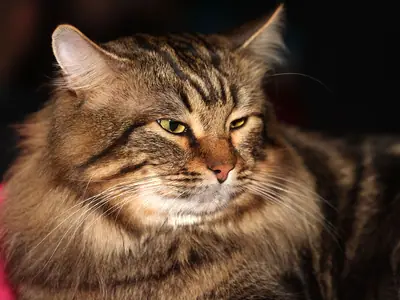
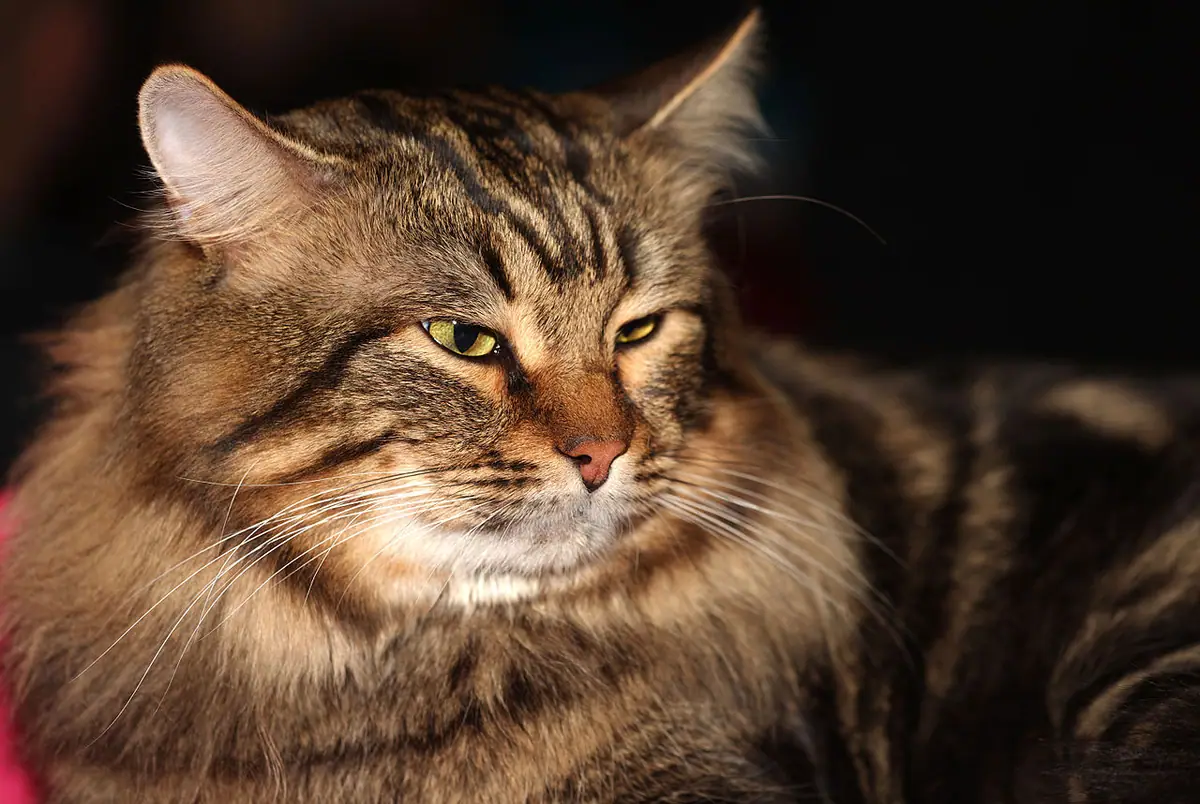
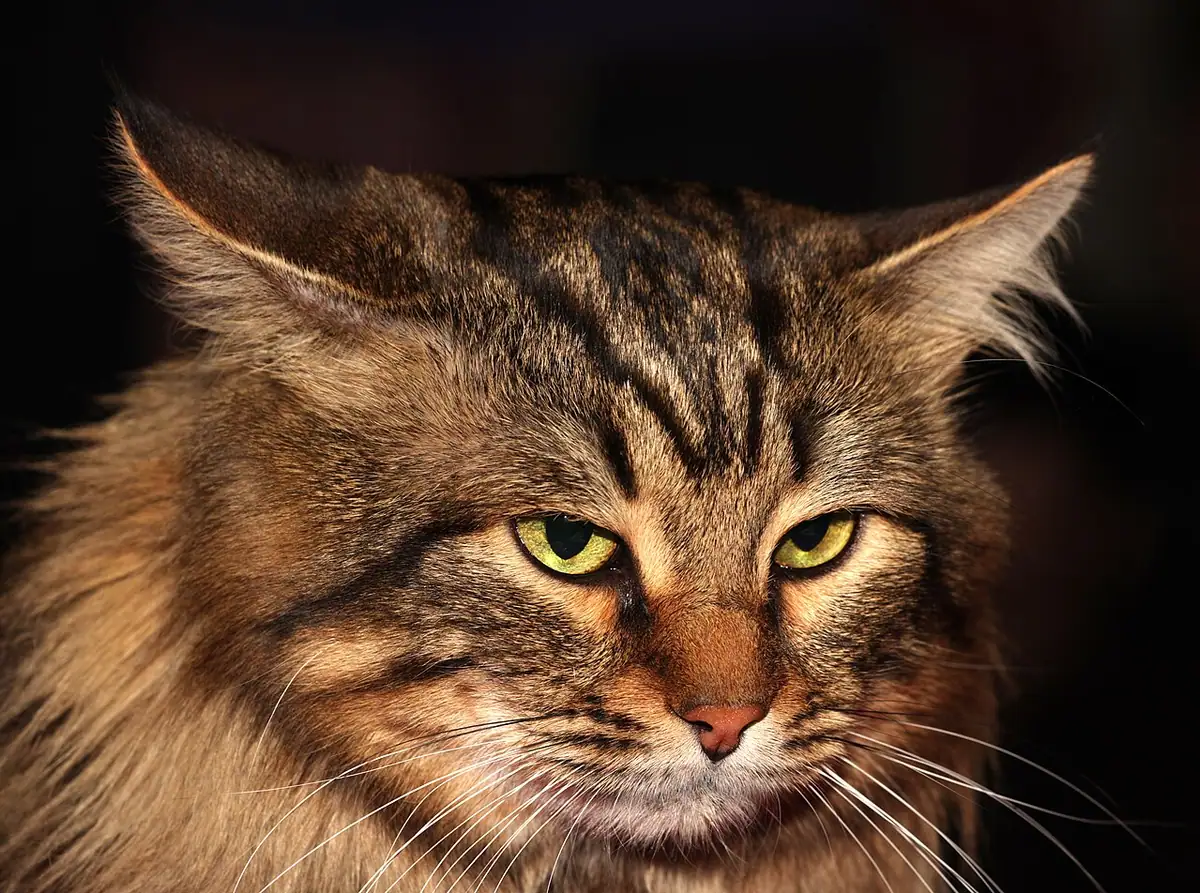
- Body: medium to medium-large, strong and muscular, heavier than it looks [1].
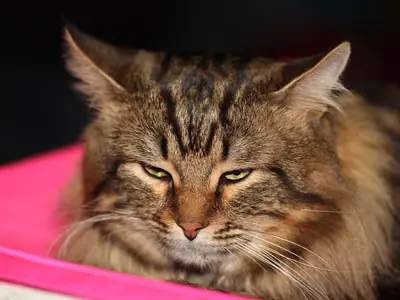
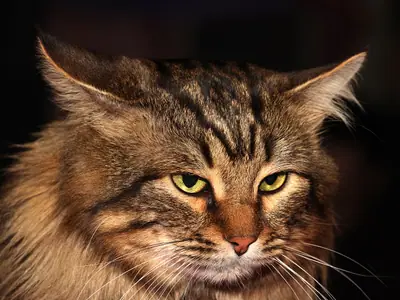
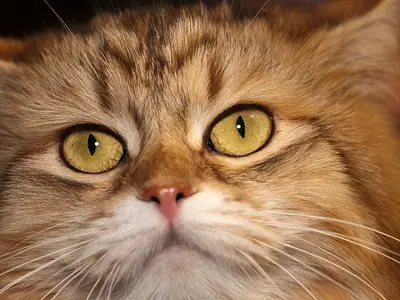
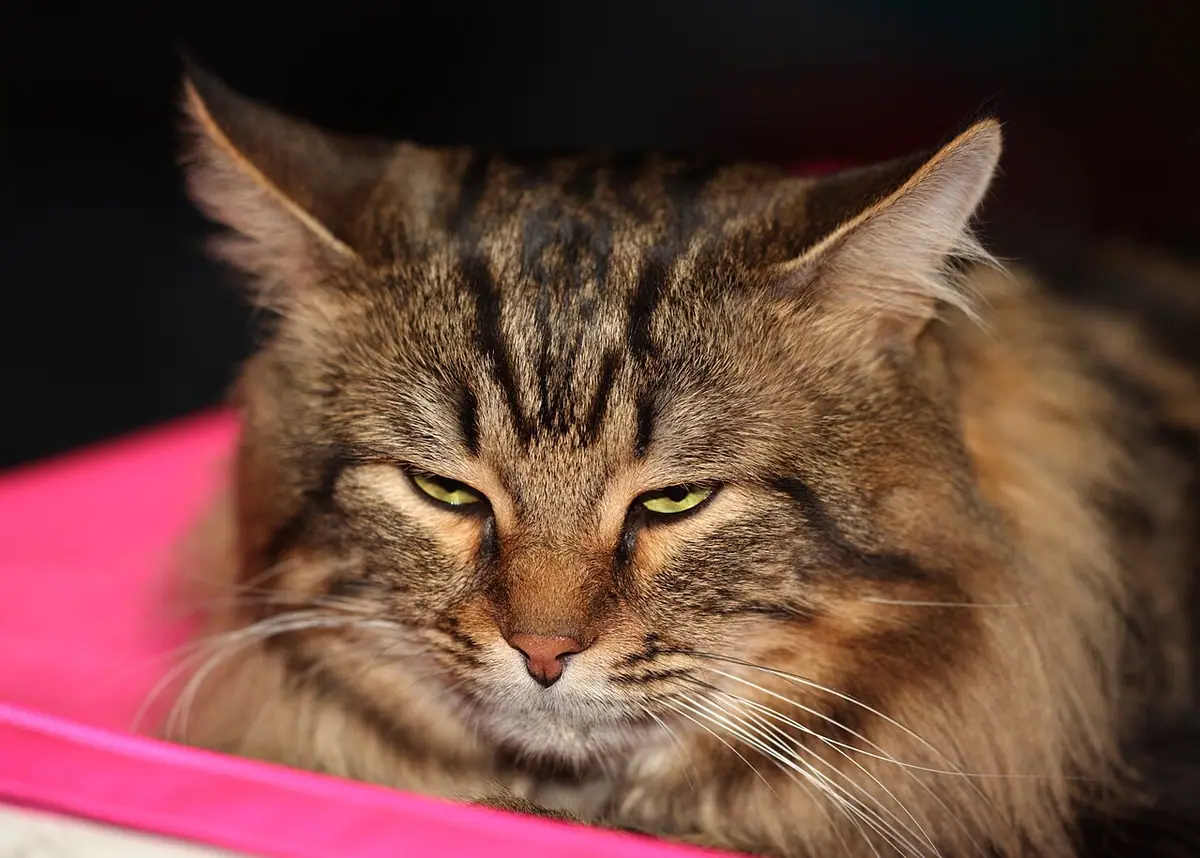
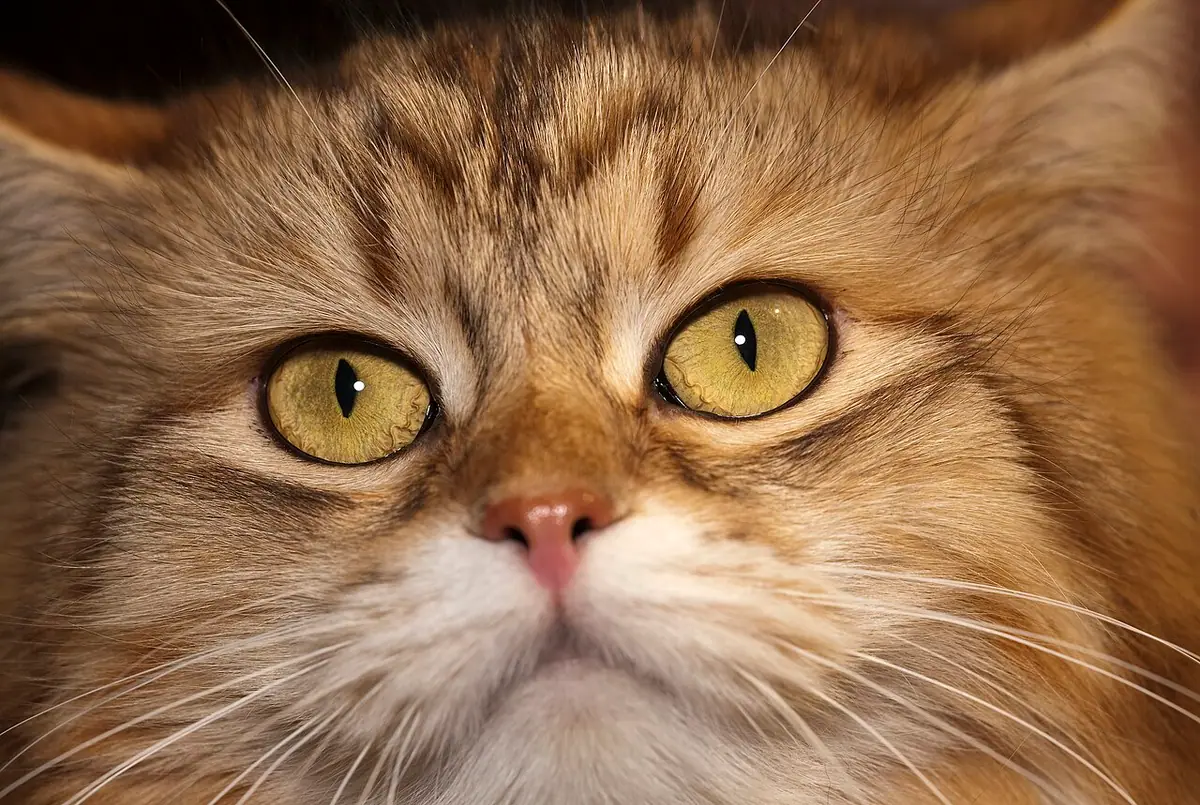
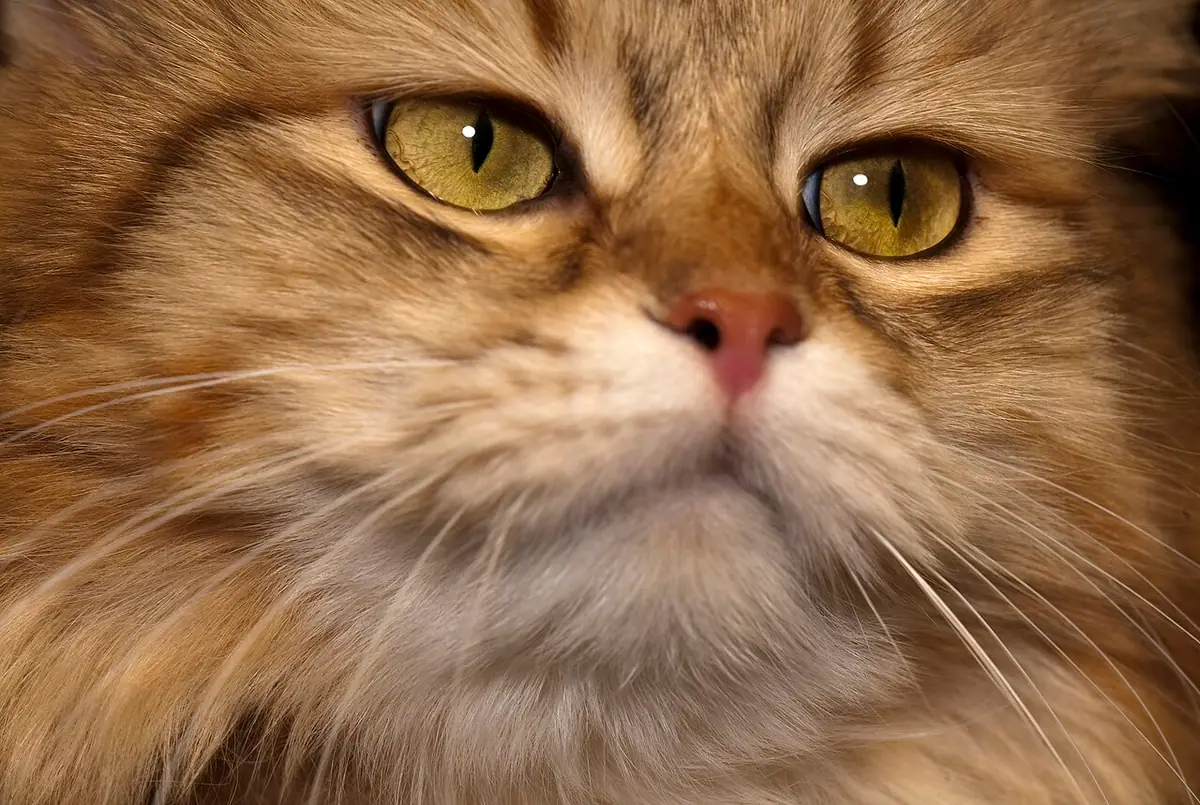
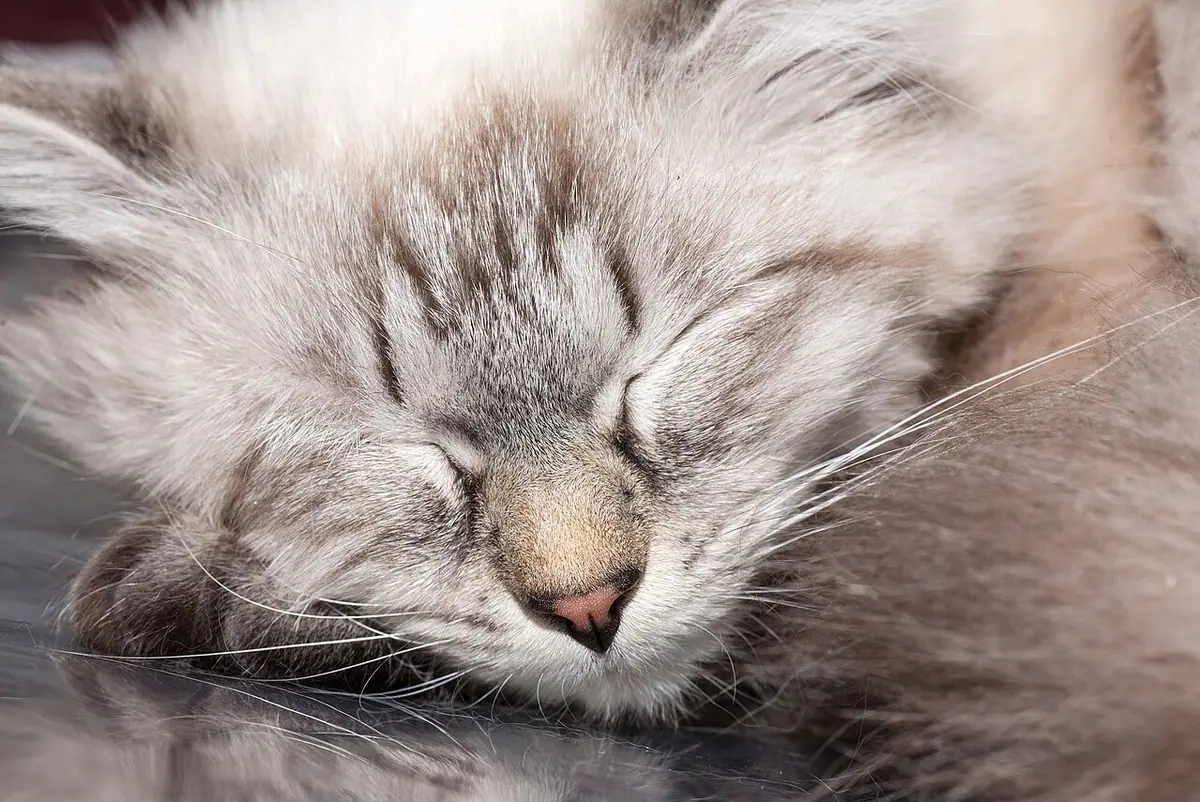
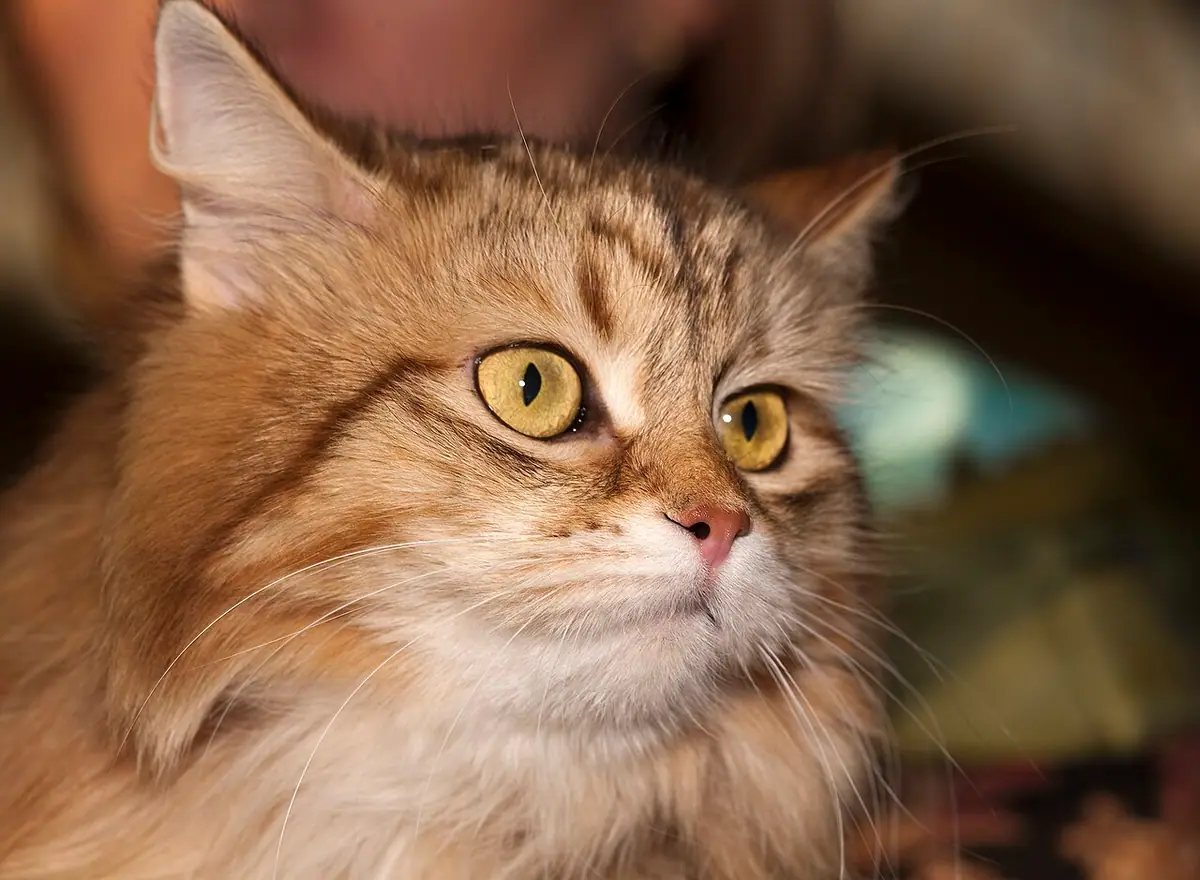
- Head: a broad modified wedge with rounded contours, a full rounded muzzle, lustrous almost-round eyes and medium, well-furnished ears [1].
- Coat: a dense triple coat, noticeably thicker in the colder months and shorter and thinner in summer [1].
- Colours: once mostly brown tabby, now almost every colour, including colourpoints and "bimetallic", with gold and silver in the same coat [1].
- Weight: males about 12–18 lb, females 8–12 lb, with most reaching full size at about three [1].
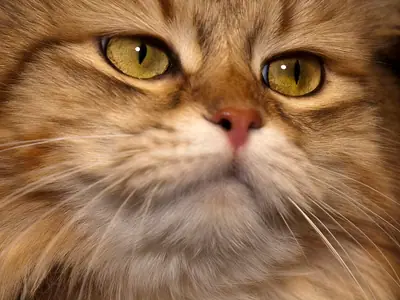
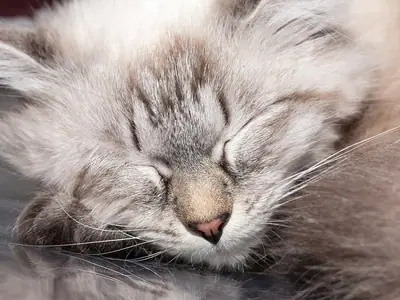
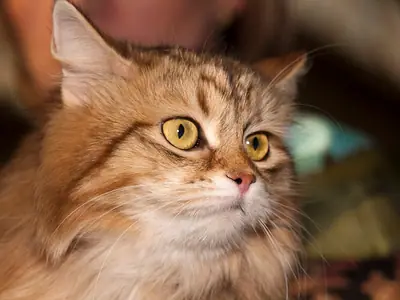
Photo gallery
7 photos · tap to enlarge- (enlarge, photo 1/7)
- (enlarge, photo 2/7)
- (enlarge, photo 3/7)
- (enlarge, photo 4/7)
- (enlarge, photo 5/7)
- (enlarge, photo 6/7)
- (enlarge, photo 7/7)
.jpg)
Photos: Wikimedia Commons - author & licence shown when enlarged and on the Photo credits page.
Temperament
Highly intelligent, as befits a natural hunter, the Siberian loves investigating cabinets, cupboards and suitcases [1]. That doesn't make it overactive or intrusive. Siberians are sociable, curious, easygoing cats that want to be near you and know what's going on [1]. They tune into their owners' moods [1] and get along with dogs, other pets and children [1]. They're quiet, preferring loud purrs to other forms of conversation [1].
Care
- Grooming: needs vary hugely; some need weekly sessions, others go weeks without [1]. Handle the underside, tail and britches several times a week to find tangles early [1].
- Mats: untangle by hand first, then comb out the rest [1].
- Cost: because of preventive genetic testing, Siberians may cost more than some other breeds [1].
Health
- Inherited conditions: CFA names hypertrophic cardiomyopathy (HCM (Hypertrophic cardiomyopathy): A heart disease where the heart wall thickens; the most common heart disease in cats. All terms ), polycystic kidney disease (PKD (Polycystic kidney disease): Inherited kidney disease where fluid-filled cysts grow in the kidneys; a gene test exists. All terms ) and several other Recessive gene: The trait only shows when a cat gets the gene from both parents; carriers look normal. All terms conditions as issues found in the breed. Responsible breeders test carefully before choosing pairs [1].
- Lifespan: GCCF estimates 12–15 years [3]. We found no breed-specific longevity study.
Ask the breeder for the parents' test results, and talk to your vet about any specific concern.
Don't confuse with…
- Norwegian Forest Cat: equilateral-triangle head, straight profile [5].
- Maine Coon: rectangular head, square muzzle, long plumed tail [6].
- Neva Masquerade: FIFe registers colourpointed Siberians as a separate breed (NEM) [2]; CFA treats Colorpoint: A pale body with darker face, ears, legs and tail, like a Siamese. All terms as a Siberian colour [1].
Ask your vet. This information is for reference only and does not replace a veterinary diagnosis.
Cat facts
Frequently asked questions
Are Siberian cats really hypoallergenic?
The evidence isn't strong enough. A 2017 genetic study of just 4 Siberians found some variants in the two genes that produce the allergen Fel d 1, but the authors themselves concluded further work is needed to tell whether those variants reduce allergen production [4]. CFA (Cat Fanciers' Association): The world's largest registry of pedigree cats, based in the US. It keeps pedigree records, writes breed standards and runs cat shows. All terms 's breed profile does not call the Siberian hypoallergenic [1]. If you have allergies, spend time with the specific cat first and ask your doctor.
How much grooming does a Siberian need?
It varies. Some need weekly sessions to prevent mats, while others can go weeks without one [1]. CFA suggests handling the underside, tail and britches several times a week to catch tangles early [1].
How is a Siberian different from a Norwegian Forest Cat?
The head is the clearest clue: the Siberian has a modified wedge with rounded contours, a full rounded muzzle and almost round eyes [1]; the Norwegian Forest Cat has an equilateral-triangle head and a straight profile [5].
Are Siberians good with children?
According to CFA, Siberians get along well with dogs and other animals and can be wonderful companions for children [1].
Similar breeds


Breed photos: Wikimedia Commons (CC0 / CC BY / CC BY-SA) - authors & licences on the Photo credits page.
References
- CFA, Siberian (breed profile & standard)
- FIFe, Breeds (SIB Siberian, fully recognised)
- GCCF, Cat Breeds (Siberian breed card)
- Sartore S et al. (2017). Polymorphism analysis of Ch1 and Ch2 genes in the Siberian cat. Veterinary Sciences 4(4):63
- CFA, Norwegian Forest Cat (breed profile & standard)
- CFA, Maine Coon (breed profile & standard)
- TICA, Browse All Breeds (Siberian listed)
Accessed: 2026-10-02
CFA, TICA, FIFe and GCCF are the major cat registries in the US, Europe and the UK. See the glossary
Written by Catopedia from the sources above. Photos credit their author and licence under each image and on the Photo credits & licences.